





















![The market-builder who restrained the market [Part 2]](https://muslimviews.co.za/wp-content/uploads/2026/08/PHOTO-2026-08-25-17-16-32-360x180.jpg)
![The merchant preceding the Prophetic mission [Part 1]](https://muslimviews.co.za/wp-content/uploads/2026/08/01-360x180.jpg)








By ASLAM FATAAR
A Prophetic pedagogy of iḥsān offers guidance for our age. It is more than abstract teaching. It is presence in daily life. It is ethical responsibility in schools, universities, mosques, and public spaces.
This article is based on a paper presented at the 4th Organisation of Islamic Cooperation–IRCICA–Awqaf SA International Conference on Islamic Civilisation in Southern Africa, September 12–14, 2025, Kirstenbosch, Cape Town.
Living faithfully in an age of crisis
We live in a world aflame. Poverty tightens its grip on the Cape Flats. Wars continue in Sudan, Ukraine and the Congo. Genocide unfolds in Gaza. Planetary sustainability remains a challenge, and Artificial Intelligence unsettles how we live and learn.
These crises are rooted in long histories of empire and colonial rule. They emerge in new forms of inequality, demeaning human lives, damaging ecosystems, and undermining communities.
The question is urgent: how do we live faithfully and justly in such a time?
As a Muslim academic and public voice, I turn to the life of the Prophet Muhammad ﷺ. His example across centuries provides what I call a Prophetic pedagogy of iḥsān. This pedagogy guides both living and teaching through the principles of beauty, excellence, justice, and mercy.
Iḥsān as the Prophet’s ethical grammar
At the heart of the Prophet’s legacy is iḥsān. The ḥadīth of Jibrīl describes it as worshipping God as though you see Him, and if you do not see Him, knowing that He sees you. The Qurʾān affirms: ‘Indeed, God loves those who act with iḥsān’ (Al-Baqarah, 2:195).
Iḥsān is an embodied ethic that influences how we speak, act, remember, and relate to one another. It was the Prophet’s philosophy of dignity and justice. He challenged oppression with integrity, practised mercy daily, and brought beauty into the heart of his community.
Revelation descended over a period of 23 years. It unfolded as tanzīl through dialogue with people, context, circumstances, and events. The Prophet ﷺ lived this revelation as ‘the Qurʾān walking on earth.’ His patience, compassion, and solidarity created a grammar of ethical action. He broke cycles of harm and made room for healing and repair.
This prophetic grammar carries forward into our time. It offers a way to live with clarity, hope, and dignity.
Reading the Prophet in his struggles
The Prophet’s relevance comes alive when we read his life in the light of his struggles. Orphaned in childhood, he was shaped in a society marked by inequality, arrogance, and cruelty, growing up in hardship.
Revelation addressed this directly. The Qurʾān commands: ‘Do not consume the property of the orphan.’ (An-Nisa, 4:2). It insists: ‘Give full measure and weight in justice.’ (An-Nisa, 6:152). These verses challenged exploitation and dishonesty, and, in turn, challenged the Makkan oligarchy.
The Prophet’s life illustrates how revelation developed in response to crisis. His grammar of iḥsān took form amid conflict and injustice. It remains a vital call to confront oppression with dignity, to resist arrogance with justice, and to embody mercy as a form of strength.
The Cape archive: Iḥsān across oceans
The Prophet’s pedagogy crossed seas and centuries. Exiled and enslaved Muslims caried it to the Cape of Good Hope.
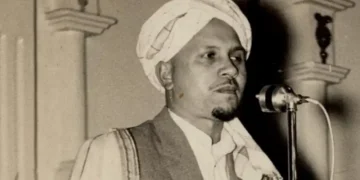
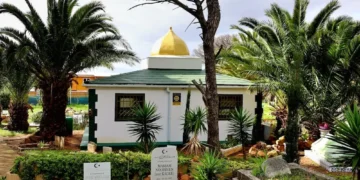
In 1694, Shaykh Yūsuf al-Maqassarī arrived at Zandvliet. Banished from his homeland, he established a circle of learning and worship. Subsequently, Soofie Saheb founded schools and mosques in Athlone. These became centres of dignity and resistance. They taught that faith and knowledge always outlast empire.
Women stood at the heart of this Cape legacy. Through matrilineal networks, they sustained language, nurtured children, kept Qurʾānic recitation alive, and preserved rituals of care and hospitality. Their homes became classrooms. Their stories formed living curricula. Their resilience laid the foundation of community survival.
This archive demonstrates that survival holds an ethical significance. It is more than endurance; it is remembrance through action. At the Cape, remembrance connected enslaved Muslims to the Prophet’s grammar of iḥsān. It allowed them to resist dehumanisation and maintain their dignity.
Dhikr: Remembering as Ethical Action
The Prophet’s teachings were based on dhikr, remembrance. The Qurʾān states: ‘Remember Me, and I will remember you.’ (Al-Baqarah, 2:152).
You may also want to read


Remembrance in the Prophetic way encompasses prayer, liturgy, storytelling, reflection, and ethical training. It maintains awareness, nurtures conscience, and prompts action.
At the Cape, remembrance preserved dignity. Qurʾānic recitation, oral teaching, and dhikr gatherings connected people to the Prophet’s ethical example. Jawi notebooks in people’s homes contained verses and spiritual remedies. Memory carried faith. These practices were acts of resistance. They affirmed that people were more than property.
Remembrance remains an ethical act today. It connects us to histories of suffering. It demands attentiveness to injustice in the present. It builds solidarity across struggles.
The fires of our time
New kinds of trials beset our world today. The Prophet described fitan as trials that descend like pieces of a dark night. We encounter these tests through genocide, war, poverty, ecological breakdown, and the rapid growth of artificial intelligence.
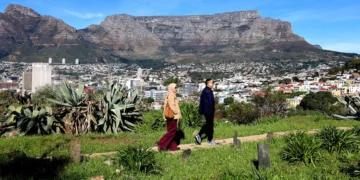
The Qurʾān provides guidance in Sūrat al-Furqān: ‘The servants of the Most Merciful are those who walk upon the earth humbly/ gently” (25:63). Walking humbly or gently is the ethic of iḥsān. It encourages us to oppose cruelty with steadiness, to live beautifully through resilience, and to bring mercy into public life.
A Prophetic pedagogy for today
A Prophetic pedagogy of iḥsān offers guidance for our age. It is more than abstract teaching. It is presence in daily life. It is ethical responsibility in schools, universities, mosques, and public spaces.
This pedagogy cultivates patience and resolve in a hurried world. It values dialogue in an age of polarisation. It nurtures moral character amidst a focus on technological outputs. It centres remembrance in an environment prone to forgetfulness.
The Prophet’s pedagogy was relational. He taught through compassion, care, and attentiveness. He treated learners as full human beings. At the Cape, enslaved Muslims did the same. They created spaces of learning in homes, kitchens, and quiet gatherings. Their practices carried forward the grammar of iḥsān.
Our universities and schools can learn from this. Education flourishes when it affirms the humanity of learners. Machines may produce information, but they do not provide compassion or wisdom. A Prophetic pedagogy recognises education as a moral trust. It urges us to create learning environments rooted in respect, trust, and ethical presence.
Conclusion: Walking with beauty in a world of fire
To inherit the Prophet’s legacy is to live iḥsān in our own fires. It is to practise beauty, excellence, and mercy in the midst of crisis. It is to cultivate resilience with clarity, resistance with dignity, and remembrance with care.
A Prophetic approach to education for a world in turmoil sustains humanity by weaving revelation with response, memory with justice, faith with action. It calls us to walk softly, live beautifully, and carry dignity into every aspect of life.
Through iḥsān we can stay truly human in an age that tests our humanity. This is the Prophet’s gift to us today: a pedagogy of presence, mercy, and renewal.
Aslam Fataar is Research Professor in Higher Education Transformation, Department of Education Policy Studies, Stellenbosch University.