

























![The market-builder who restrained the market [Part 2]](https://muslimviews.co.za/wp-content/uploads/2026/08/PHOTO-2026-08-25-17-16-32-360x180.jpg)
![The merchant preceding the Prophetic mission [Part 1]](https://muslimviews.co.za/wp-content/uploads/2026/08/01-360x180.jpg)











We experienced the generosity of Moroccan hospitality, the beauty of its sacred architecture, and the enduring power of shared prayer.
By YASIEN MOHAMED
Morocco is a country where the past and present coexist harmoniously – its ancient medinas resonate with history, while the vibrancy of modern life thrives in its cafés, mosques, and meeting halls. It was within this multilayered landscape that my son Nabil and I arrived for a gathering that represented another type of intersection: a conference on law and religion in Africa.
The 12th African Consortium for Law and Religion Studies took place from May 18 to 21, 2025 at Mohammed VI Polytechnic University in Ben Guerir. This conference attracted 150 delegates from 21 African countries.
The prospect of travelling to Morocco filled us with excitement. Yet, while the academic promise of the event was invigorating, the road to Ben Guerir proved less straightforward. We encountered a familiar hurdle: the visa process. South Africans must apply for Moroccan visas in person at the embassy in Pretoria. Nabil made the trip, but I stayed behind, reluctant to undertake the long journey without assurance. Eventually, a letter from the Moroccan Ministry arrived, promising that visas could be issued upon arrival. Encouraged, I booked my flight.
Our experience with the visa process hinted at something more than administrative delay – it revealed the subtle presence of political undercurrents. South Africa has long supported Algeria’s position in the Western Sahara dispute, recognising the Sahrawi Arab Democratic Republic, which Morocco claims as its own territory. This stance has strained diplomatic ties, subtly influencing travel protocols and bureaucratic interactions.
Morocco’s recent normalisation of relations with Israel – part of the Abraham Accords – adds another layer of complexity, particularly given South Africa’s strong pro-Palestinian stance. These dynamics, though not always visible, shaped the context of our visit, reminding us that even spiritual or academic journeys are never entirely removed from the shadows of international politics.
Sacred stops and generous hosts
We were warmly welcomed by Abdul Fatah and his Cape Town–born wife. A disciple of a Sufi Shaykh, Abdul Fatah guided us through his favourite bookstores, where Nabil bought several copies of Dala’il al-Khayrat (Guides of Goodness), the renowned collection of blessings upon the Prophet Muhammad (peace be upon him). When those copies were later lost, Abdul Fatah generously gave Nabil his own.
We visited Marrakesh twice – first with a group, then on our own.
On our second visit, we sought the shrines of the Seven Saints of Marrakesh, including Qadi Iyad, and especially that of Shaykh Muhammad al-Jazuli. Tradition holds that visiting the shrine of Imam al-Jazuli brings the blessings of all seven. His story lives in Moroccan memory: after his body was exhumed in 1541 – 77 years after death – it was found intact.
You may also want to read


One story describes him approaching a well to drink water, but the well was dry. A young girl saw him at the well and spat into it, causing water to appear. He asked her how she managed this, and she replied that she sent many salutations upon the Prophet (peace be upon him). This led Imam al-Jazuli to compile the Dala’il al-Khayrat, which is widely known in Sufi circles.
At his hidden shrine, we joined women and dervishes in recitation. Later, we met the descendant of Imam al-Jazuli, who quietly shared that the Dala’il is still recited every Thursday after ʿAsr. The Shaykh himself leads, concluding with a powerful duʿāʾ – hands raised, voice trembling, praying for the sick, the poor, even children in the alleys. After the final āmīn, a simple rice dish was shared with all.
Scholarly exchange and tensions
Elder Alfred Kyungu, General Authority Seventy and President of the Africa West Area, opened the session by highlighting Morocco’s history of religious pluralism and affirming the Church’s commitment to religious freedom in Africa. My paper on asabiyya (social solidarity) in Ibn Khaldun’s thought generated many questions. Nabil’s presentation on AI, transhumanism, and Islamic ethics was well received.

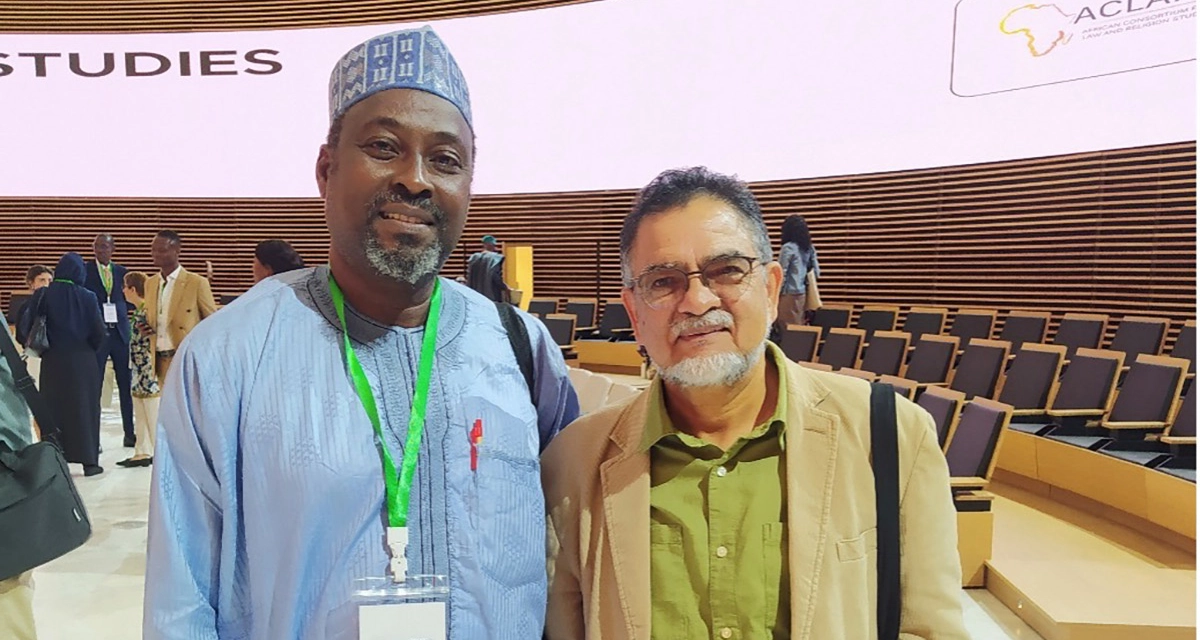
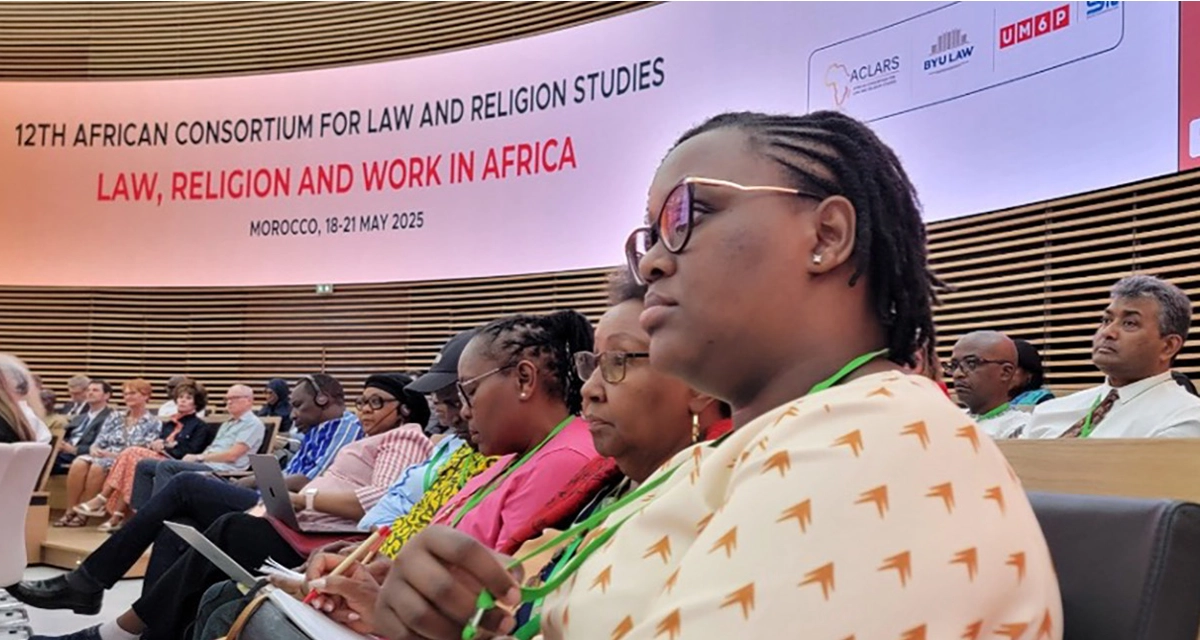
The Moroccan organiser faced challenges in balancing scholarly openness with local sensitivities. Criticisms included Morocco’s lack of legal recognition for Ahmadis and Bahá’ís and concerns over a paper on LGBT rights appearing without approval. Despite these tensions, dialogue prevailed with contributions from colleagues enriching the experience, including that of Fatima Seedat, Fatima Essop, Muhammad Haron, and Lee-Scharnick-Udermans.
Three Cups of Tea
The conference ended, and the city’s rhythm gave way to the textured stillness of a small Moroccan town.
Nabil was intent on finding jellabiyas for his sons – handwoven ones from a local souk. Hoping to avoid the hotel’s steep taxi rates, we waited by the roadside until a bakkie – a small pickup – pulled up beside us. The young driver offered us a ride to the taxi rank and, with a smile, refused any payment: ‘You’re guests here.’
While waiting for the taxi to fill, we slipped into a modest coffee shop nearby. The chairs were uneven, and the air was thick with the scent of mint tea. We joined two elderly Shaykhs – men of quiet dignity, their lined faces bearing the calm of long-earned wisdom. They ordered us tea and, like the driver, insisted on paying. ‘Duyufuna,’ they said. ‘You are our guests.’ In that humble café, we encountered a hospitality no hotel could offer.
They served us three cups of tea. The first cup represents acquaintance, the second indicates friendship, and the third signifies kinship. Each cup is associated with a progression in relationships, transforming shared moments into bonds of trust. Additionally, the metaphor of the three cups carries spiritual significance. The Shaykhs referred to their lineage – Ashʿarī in creed, Mālikī in law, and Junaydī in spiritual path – as encompassing Islam, Imān, and Iḥsān. The three cups symbolise not only the social ritual of hospitality but also a journey through these three dimensions of faith. With each sip of tea, we explored deeper aspects of Moroccan culture and the transition from the outer practices of religion to the inner dimensions of faith, fostering a connection to the divine.
Journey of the heart
As we departed, I reflected on how this journey had transcended academia. We experienced the generosity of Moroccan hospitality, the beauty of its sacred architecture, and the enduring power of shared prayer. We witnessed both the promise and the challenges of interfaith dialogue – and we left with hearts full and spirits deeply moved. In a world often fractured by division, Morocco offered a glimpse of another way – where respect, scholarship and spirituality can coexist. What we found there was not just insight, but inspiration.