





















![The market-builder who restrained the market [Part 2]](https://muslimviews.co.za/wp-content/uploads/2026/08/PHOTO-2026-08-25-17-16-32-360x180.jpg)
![The merchant preceding the Prophetic mission [Part 1]](https://muslimviews.co.za/wp-content/uploads/2026/08/01-360x180.jpg)



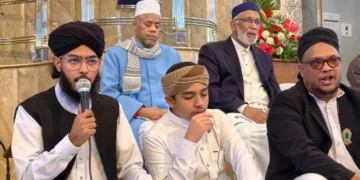

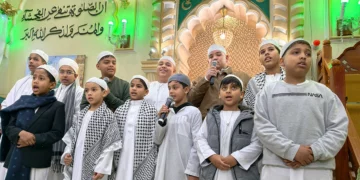






Fifty years after his passing, Imam Abubaker Saban is remembered for a lifetime of quiet service, sacrifice and enduring impact on Cape Town’s Muslim community.
By SHAKIR ACHMAT
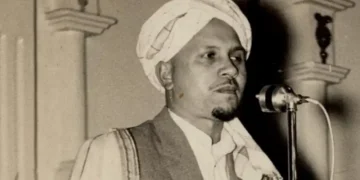
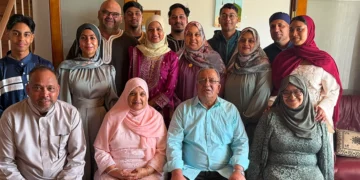
Sunday, January 18, 2026 was a day of remembrance, reflection and gratitude as people gathered from across Cape Town and beyond for the khatam al Quran and commemoration of Imam Abubaker Saban, a man whose life of service shaped institutions, families and the wider Muslim community in such a way that its impact has left an indelible mark.
The gathering, held at Islamia College in Lansdowne, marked half a century since his passing, yet the scale of attendance reflected how deeply Imam Abubaker Saban’s service continues to shape community life 50 years on.
The hall was filled not only with members of the Saban family, but with community members, scholars and leaders who understood that this was more than a memorial. It was a reminder of a generation that served Islam quietly, consistently and without expectation of recognition.
Throughout the programme, one message remained clear: Imam Abubaker Saban was not remembered because of titles or status, but because of how deeply his life was woven into the everyday struggles and needs of the people he served.


A life built on sacrifice
One of the most moving moments of the commemoration was the address by Imam Mou’tie Saban, the son of Imam Abubaker Saban. Speaking with clarity and emotion, he shared personal memories that revealed the character of a father whose life revolved around service to Allah and His creation.
Imam Mou’tie, who himself has served Jamia Masjid in Chiapinni Street, Bo-Kaap, for over four decades, described how his father, a tailor by profession, never allowed his work to distract him from teaching the Quran. While earning a living, he would teach children, guide families and serve the community in any way he could. His commitment was not confined to convenience or comfort.
In the late 1950s, Imam Abubaker Saban regularly travelled to Faure, approximately 50 kilometres from Cape Town, to lead Jumuah prayers. Imam Mou’tie recalled walking with his father from District Six to Cape Town station early in the morning. They would board a steam train just after seven in the morning, travel for two hours, and then walk for nearly another two hours through farms and gravel roads to reach the masjid.
Upon arrival, Imam Abubaker Saban would change from his suit into his thobe and jubbah, deliver the khutbah, lead the prayer, and then begin the long journey home. They would only return after five in the afternoon. This journey was repeated many times and was never spoken about as a sacrifice. It was simply duty.
On days when the weather was bad, rivers flooded and roads were difficult to cross, Imam Mou’tie remembered how his father would roll up his trousers, remove his shoes, and walk through the water rather than turn back. For him, the responsibility to the community outweighed physical discomfort.
Another story shared illustrated his father’s approach to guidance. A man who had lived with a woman for decades approached Imam Abubaker Saban requesting that the Imam perform his nikah the following day. Rather than delay or judge, he insisted that the matter be resolved immediately. That very evening, he guided the couple through a proper nikah, restoring dignity and religious correctness to their lives. The following day, news came that the man had passed away.
Imam Mou’tie explained that his father acted with urgency because he understood how fragile life is. This, he said, was how his father served people – with compassion, wisdom and a deep sense of responsibility.
Imam Mou’tie also recalled an incident on a New Year’s Day when Imam Abubaker Saban corrected a man dressed in Klopse attire with his face painted. He reminded him that a Muslim who stands on the plains of Arafah should carry that dignity wherever he goes. The correction was firm, but rooted in care and respect for faith and self-worth.
Why he was called ‘Imam Hospital’
Imam Abubaker Saban’s reputation as ‘Imam Hospital’ reflected decades of dedicated service to the sick and vulnerable. He travelled across Cape Town on foot and by bus to visit patients in hospitals, offering comfort and ensuring that Muslim patients received proper care. He helped establish the first halal kitchen at Groote Schuur Hospital, in conjunction with what was then known as the Hospital Welfare Movement, and worked closely with authorities to ensure that religious practices were respected in life and in death.
Service beyond the mimbar
Imam Abubaker Saban’s service extended far beyond the masjid. Long before supermarkets and certified suppliers, the Muslim community relied on trusted individuals to ensure halal food. Imam Abubaker Saban took on the responsibility of preparing and supplying halal chickens, understanding that this was an essential part of daily religious life.
Beyond his public service, Imam Abubaker Saban carried the same sense of responsibility into his home and personal relationships.
He guided families through moments of loss and uncertainty, offering calm counsel rooted in faith. His children were raised with discipline, humility and strong spiritual grounding. Daily Quran recitation was encouraged, and they were taught to place their trust in Allah in every circumstance – lessons that shaped their lives long after his passing.
As Imam Mou’tie explained, his father lived by a simple principle drawn from the Quran: worship your Lord until your final breath. That belief shaped every aspect of his life.

Hospital Welfare and a vision that endures
The programme also featured an address by Akbar Khalfe, President of the Hospital Welfare and Muslim Educational Movement (HWMEM). His input placed Imam Abubaker Saban’s work within a broader historical context.
The Hospital Welfare Movement began in 1942 during the Second World War, when Muslim sailors were admitted to Somerset Hospital and required halal food. What began as a small community effort grew into an organised structure that provided halal meals, hospital visits, burial assistance and social support.
Imam Abubaker Saban became a central figure in this work. Through his relationships with hospital staff and mortuary officials, he helped establish trust that ensured dignity and efficiency in the handling of Muslim patients and deceased persons.
In 1969, the Hospital Welfare Movement expanded into education and was renamed the Hospital Welfare and Muslim Educational Movement, offering interest-free loan bursaries to students. This vision was rooted in the belief that educating youth would prepare them to contribute meaningfully to a future democratic South Africa. Since then, approximately 7 000 students have benefited from this support.
Today, Hospital Welfare inspects 23 hospitals and food service units, administers Madrasatul Khair for visually impaired learners, and provides food parcels to the indigent throughout the year.
Khalfe reminded the audience that these services exist because of the sacrifices laid down by founders such as Imam Abubaker Saban.
A family legacy of service
The Saban family’s connection to HWMEM continues across generations. Imam Abubaker Saban’s granddaughter Khadija and her husband Ridwan Manuel are active members of the organisation, with Ridwan serving as Social Welfare Secretary.
Khalfe emphasised that the Saban family is synonymous with HWMEM. Their commitment is not symbolic but practical and ongoing, reflecting a legacy that continues through action rather than words.

A wider historical responsibility
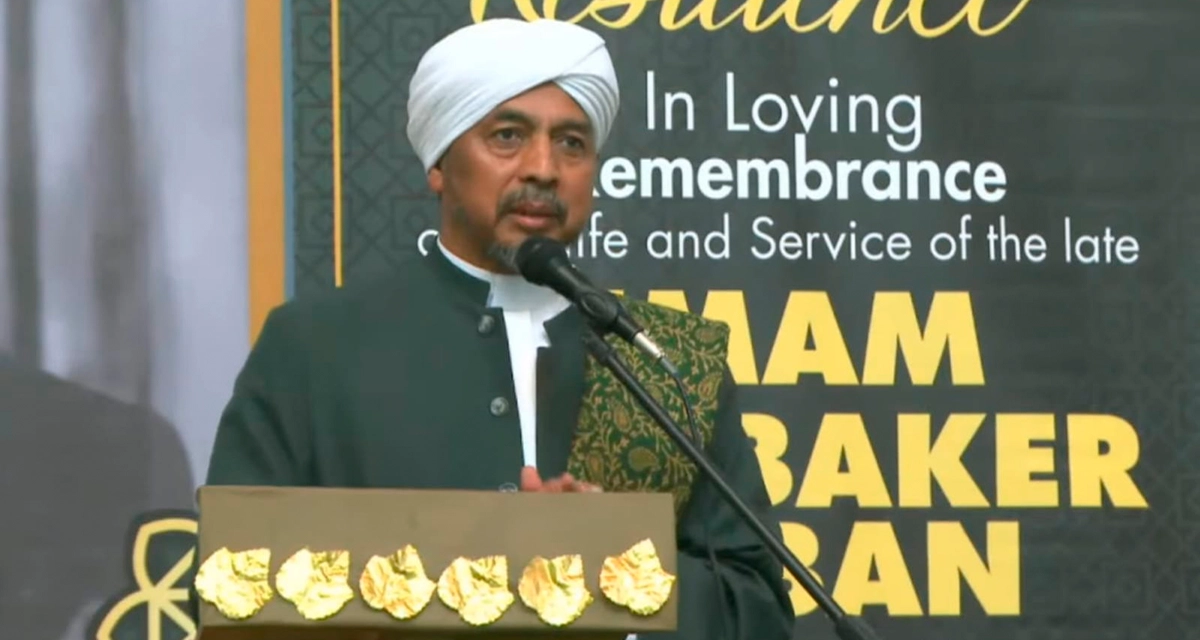
Shaykh Riad Fataar, President of the Muslim Judicial Council (MJC), reflected on the deep link between Imam Abubaker Saban’s life and the history of the MJC. He reminded the audience that the council has served the community for over 80 years and that its foundations were built by individuals who endured colonialism, apartheid and the Group Areas Act while remaining steadfast in their faith.
He urged the community to reflect on their generational responsibility, reminding them that the benefits enjoyed today are the result of sacrifices made decades earlier, often without recognition.
Closing reflections and dua
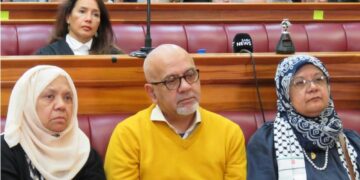
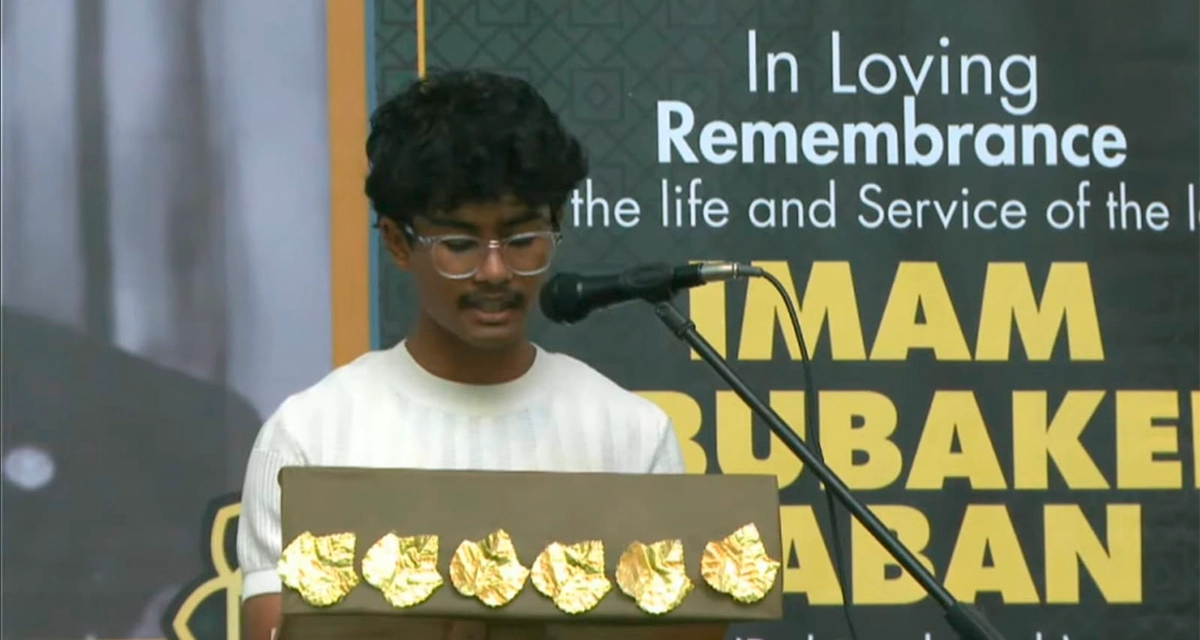
Before the conclusion, Yameen Hendricks, the great-grandson of Imam Abubaker Saban, delivered a vote of thanks on behalf of the family, acknowledging all those who contributed to the success of the event.
The programme concluded with a dua by Shaykh Ebrahim Gabriels, who summarised the essence of the gathering in a few heartfelt reflections. He spoke about how communities elsewhere in the world have struggled to preserve Islam across generations, and how Cape Town is blessed with a strong Muslim identity because of people such as Imam Abubaker Saban. He reminded the family and community that the need for service today is even greater than before, especially in a city where poverty and hardship remain widespread. He urged the next generations to continue this legacy of service, compassion and commitment.
A living legacy
As the gathering came to an end, it was clear that Imam Abubaker Saban’s life cannot be confined to history books or commemorative events. His legacy lives on in hospitals, masjids, welfare organisations, classrooms and families across Cape Town.
The commemoration was not only about remembering the past, but about recognising a responsibility carried into the present. Imam Abubaker Saban’s life remains a reminder that serving Allah and serving people are inseparable, and that true leadership is measured by what continues long after one has returned to their Creator.