






























![The market-builder who restrained the market [Part 2]](https://muslimviews.co.za/wp-content/uploads/2026/08/PHOTO-2026-08-25-17-16-32-360x180.jpg)
![The merchant preceding the Prophetic mission [Part 1]](https://muslimviews.co.za/wp-content/uploads/2026/08/01-360x180.jpg)





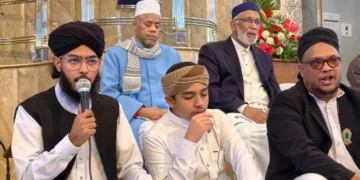

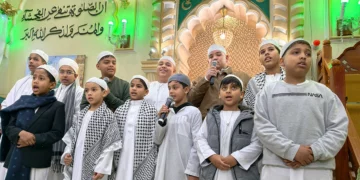





As South Africans face growing uncertainty, Ramadan offers a framework for restraint, reflection and ethical living rooted in faith, compassion, and purpose. And as the month approaches, the writer encourages Muslims to prepare by readying the heart and body.
By PROFESSOR ASLAM FATAAR
This is the text of the Khutbah presented at the Durbanville Islamic Society community on Friday, January 30, 2026.
Living with pressure and uncertainty
Life in South Africa feels heavy for many people. Families are under financial pressure. Communities feel strained. Many live with uncertainty about work, safety, and the future.
At the same time, our lives are filled with noise; phones, social media, endless messages, and constant comparison. It is easy to feel unsettled, distracted, and worn down.
Why faith matters in difficult times
In moments like these, faith matters. As grounding. Islam offers resources that help people live with dignity, steadiness, and care, even when life is difficult.
The weekly pause of Jumuʿah reminds us of this. On Fridays, Muslims are called to stop. We leave work, trade, and routine. We gather for prayer and remembrance. This pause is not accidental. It is a reminder that life cannot be lived only at speed. Hearts need rest. Minds need clarity. People need grounding.
The Qurʾān tells us that it is in the remembrance of Allah that hearts find rest. This rest prepares us to return to our lives with balance and purpose. It helps us to respond rather than react.
Listening, learning and moral responsibility in Islam
Islam began with beckoning to listening and attentiveness. The first word revealed to the Prophet Muhammad ﷺ was iqraʾ — recite, listen, pay attention. This was not only about reading text. It was about learning how to hear, feel and see the world clearly and responsibly. The reference to the Qalam in the first revealed verses — the pen — reminds us of learning about our accountability and ethical judgment.
From the beginning, Islam linked faith to learning and moral responsibility. Belief was never meant to be shallow or careless. It was meant to shape how people live.
Adab as the foundation of ethical living
The Prophet ﷺ spoke about this clearly when he said: ‘My Lord taught me adab and made my adab beautiful.’ This is a beautiful hadith. Adab is about ethical conduct. It is about how we carry ourselves, how we treat others, how we restrain ourselves, and how we respond to difficulty. In short, it is lived behaviour.
Early Muslim responses to hardship and injustice
This ethical grounding guided the early Muslim community during hardship. When persecution became severe in Makkah, the Prophet ﷺ advised some of his followers to migrate to Abyssinia. There, a Christian king, known for his justice, offered them protection. This first migration showed that Islam values coexistence, dignity, safety, and fairness wherever it is found.
Among those who found refuge were the Prophet’s daughter Ruqayyah and her husband, ʿUthmān ibn ʿAffān, who became the third caliph. Their experience reminds us that faith supports pluralism and respect. Ethical conduct builds bridges.
Building a just and inclusive community in Madinah
Later, the Prophet ﷺ migrated to Madinah. There, he helped establish a community built on justice, inclusion, and shared responsibility. Worship, markets, education, welfare, and agreements between different groups formed part of this social order. Faith shaped everyday life.
At the heart of this way of living was tawḥīd. Belief in Allah shaped values. It guided how people treated one another. It connected worship to justice, mercy, and care for the vulnerable.
Modern pressures and the need for self-discipline
This integrated approach speaks strongly to our time. Many people today feel pulled in different directions. Financial stress limits our choices. Social media pulls attention away from what matters. Digital spaces can stir envy, impatience, and anger. In this environment, good intentions alone are not enough. People need training of the self.
What Ramadan teaches beyond fasting
This is where Ramadan matters deeply. Ramadan is not only about staying away from food and drink. It is about shaping the body and the heart together. Fasting teaches restraint. Hunger reminds us of those who struggle daily. Changed routines loosen the grip of habit. The body learns patience so the heart can lead.
In a time of constant digital temptation, fasting teaches us to pause before acting. It helps us regain control over desire and attention. It gives space to reflect. It slows us down. It offers space for contemplation and healthy social interaction.
You may also want to read


Ramadan as a structure for spiritual growth
Ramadan also brings structure. Prayer anchors the day. Qurʾān recitation deepens understanding. Acts of generosity strengthen connections with others. These practices are simple, but powerful. They shape how people live.
The Prophet ﷺ taught that knowledge is gained through learning, and forbearance and judiciousness through practice. This is an important reminder. Good character does not appear overnight. It grows through effort, repetition, and example. Ramadan supports this growth.
Human dignity and inner steadiness
The Qurʾān reminds us that human beings are created in the best form. This potential is real, but it needs care. Faith offers that care. Through worship, reflection, and ethical practice, people grow in patience, confidence, and steadiness.
This steadiness matters. It helps people walk gently in the world, without becoming harsh or withdrawn. It helps them stand firm, without becoming rigid or uncaring. This balance is needed in families, workplaces, and communities.
Justice, excellence and generosity as core Islamic values
Islam brings this ethical vision together in a clear command: justice, excellence, and generosity. Justice in how we deal with others. Excellence in how we conduct ourselves. Generosity in how we care for those around us.
Preparing for Ramadan in challenging times
As Ramadan approaches, Muslims are invited to prepare. Not only by planning meals or routines, but by readying the heart and body. Ramadan is a school. It trains people to live with discipline, compassion, and purpose.
In difficult times, such training is not a luxury. It is essential. It helps people stay human. It helps communities hold together. It reminds us that faith, when lived well, brings strength, calm, and care into the world. Ramadan offers us that chance again.
Aslam Fataar is a Research Professor in Higher Education Transformation at Stellenbosch University.