





















![The market-builder who restrained the market [Part 2]](https://muslimviews.co.za/wp-content/uploads/2026/08/PHOTO-2026-08-25-17-16-32-360x180.jpg)
![The merchant preceding the Prophetic mission [Part 1]](https://muslimviews.co.za/wp-content/uploads/2026/08/01-360x180.jpg)



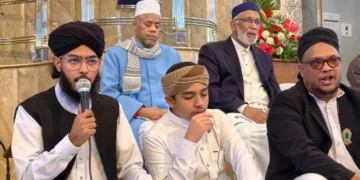





A thoughtful review of A Journey of the Muslims and the Heritage from Cape to Newclare examines Cape Muslim identity, forced removals and community memory in Johannesburg’s Newclare.
REVIEW BY DR MUHAMMED HARON
Zainoodien Moosa, 2024. A Journey of the Muslims and the Heritage from Cape to Newclare: A Personal Perspective. Johannesburg: Jet Printers. Illustrated, 531 pages.
Apartheid legacies and spatial inequality
Apartheid South Africa’s notorious Group Areas Act lingers on in a post-apartheid era; this is evident when listing and identifying the suburbs in and around Johannesburg (as well as those elsewhere in the country). Quite a few suburbs have demographically changed as a consequence of economically mobile classes having moved up and shifting to these suburbs; amidst these developments, multitudes of communities’ financial status have not actually improved qualitatively; and, as a result, they have remained challenged without having made any economic headway or improvements.
Newclare: a township shaped by history and displacement
Keeping these socio-economic and political factors in mind and when turning to Newclare, an old Johannesburg township that was created in 1905, popular reports recorded that this small geographic locale developed into a growing township in 1912; and it was subsequently surrounded by other smaller townships such as Bosmont, Westbury, Coronationville and Newlands. Over time, it remained socially, economically and culturally challenged as it transformed into a predominantly coloured township; a town that derived its name from two older towns, namely Newlands and Claremont.
Cape Muslims and community memory
You may also want to read


For those familiar with South Africa’s geographically crafted racial setting before and throughout the apartheid era would know that the ‘Cape Malays’ (also referred to as Cape Muslims) formed an integral part of the coloured community. Zainodeen Moosa, a former school principal who authored and compiled A Journey of the Muslims and the Heritage from Cape to Newclare, turned his focus to this well-established community of which he was, and continues to be, a leading member. Since very little was written by researchers or scholars about this township and its community, Moosa noted the urgent need to do so; for that reason, he embarked on this project and appropriately subtitled it A Personal Perspective.
A personal perspective and publishing choices
Moosa mentioned that he undertook this ambitious writing project more than 15 years ago and managed to complete it during the early part of 2024. Since it was ‘a personal perspective’, Moosa opted not to approach an established South African publisher to publish it. Though he chose to self-publish, he inadvertently failed to obtain a 13-digit ISBN number from the National Library of South Africa, as expected.
Scope, sources and structure of the book
That aside, as this review shifts to the publication’s contents, it should be stated that Moosa pursued a very ambitious project that contained sections which, in this reviewer’s view, could have been excluded. Nevertheless, Moosa relied heavily on a range of previous publications, as observed from the bibliography, which includes published texts, online references and interviews. These sources assisted him in charting a socio-cultural history of Newclare’s Cape Muslim community, with particular attention to the masjid.
Although Moosa intended to concentrate specifically on this community, he decided to situate its story within a broader historical context. At times, this broader framing causes the narrative to lose focus, as it stretches back several centuries to the early Cape Muslim community. While informative, this approach raises questions about whether a tighter focus on Newclare’s more recent history might have produced a richer and more detailed socio-historical account.
Early chapters: tracing Cape Malay origins
Given that Moosa’s tome consists of 23 chapters, it is beyond the scope of this review to provide a detailed assessment of each. The early chapters offer useful insights into the Cape Malays, tracing their social background from the Melayu Archipelago and weaving in connections with Johannesburg’s Fietas community. While informative, some of this material remains descriptive rather than analytical.
The Newclare Juma Masjid and religious leadership
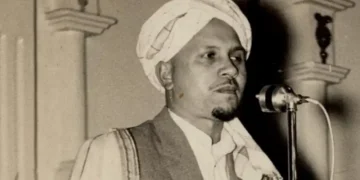
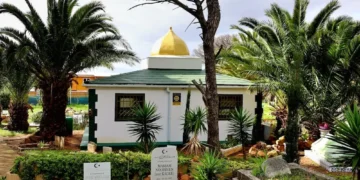
The later chapters turn attention to the Newclare Juma Masjid, its management and those who frequented it over the years. Moosa documents the lineage of imams from the late nineteenth century through to the early twenty-first century, revealing strong familial and geographic ties with Cape Town and surrounding areas. This detailed catalogue of names and relationships is one of the book’s notable strengths.
Education, the madrasa and community figures
Other chapters focus on the madrasa and individuals who played a central role in religious education within the community. Moosa’s familiarity with these personalities adds depth and texture to this section, demonstrating his insider knowledge.
Looking ahead: sustainability and community futures
In the concluding chapters, Moosa reflects on what lies ahead for the masjid and its congregation. He offers personal thoughts on sustainability, inclusivity and adaptation in a secular, post-apartheid South Africa. These reflections read as a blueprint for community renewal, though they might have been even more effective had they been introduced earlier and integrated throughout the historical narrative.
Reference tools and historical timelines
The book also includes supporting material such as a list of abbreviations, a glossary of useful terms and a chronological timeline spanning from 1652 to 2022. These elements assist readers who may be unfamiliar with aspects of South African Muslim history.
Why this book matters
Despite its unevenness, the publication fills an important gap. It is the only work devoted entirely to the Newclare Cape Muslim community, offers a fair understanding of its religio-cultural identity and reveals aspects of this community that are little known. The inclusion of photographs, despite variable quality, adds a valuable visual dimension.
Overall, Moosa’s work is a readable and sincere contribution that preserves community memory and lays the groundwork for future research and engagement.
Dr Muhammed Haron is Director of International Relations at the International Peace College of South Africa and Head of Office of South Africa’s Deputy Minister of Social Development.
To purchase a copy contact:
Zainodeen Moosa – 082 786 7457
Omar Dreyer – 072 790 2494
Aziz Wadvalla – 082 558 9508
Ebrahim Roos – 074 423 0107