





















![The market-builder who restrained the market [Part 2]](https://muslimviews.co.za/wp-content/uploads/2026/08/PHOTO-2026-08-25-17-16-32-360x180.jpg)
![The merchant preceding the Prophetic mission [Part 1]](https://muslimviews.co.za/wp-content/uploads/2026/08/01-360x180.jpg)








By ANWAR OMAR
South Africa’s history and heritage are often conflated, yet each serves a different purpose. In this reflective essay, Anwar Omar explores how reclaiming contested memories — from Robben Island to Rhodes Must Fall to the Trojan Horse Massacre — can support justice, inclusion and healing in a decolonising society.
History and heritage are frequently conflated in public discourse, yet they are distinct concepts that serve different intellectual purposes and social functions. This conflation can obscure the political dynamics involved in curating and institutionalising a nation’s historical experience.
In South Africa, the legacies of colonialism, slavery and apartheid have rendered both history and heritage deeply politicised and inherently contested. Ongoing processes of decolonisation and restitution have renewed focus on whose histories are told, whose memories are commemorated, and who has the authority to determine what becomes heritage.
What is history?
History is the systematic and evidence-based study of the past. It relies on critical analysis, documentation and chronological frameworks to reconstruct events, examine their causes and interpret their consequences. Historical accounts evolve as new evidence emerges, underscoring the dynamic nature of the discipline. The purpose of history is not celebration but understanding.

South African historian Patric Tauriq Mellet exemplifies revisionist historiography that challenges Eurocentric narratives. In The Lie of 1652: A Decolonised History of Land (2020), he debunks the colonial suggestion that South African history began with Jan van Riebeeck’s arrival at the Cape, reconstructing instead the precolonial histories of indigenous African societies. In Cape Slavery in Context: The Creation of a Creole Culture in the Cape Colony (2023), he reframes Cape slavery as a central formative influence on language, cuisine, religion and identity.
Mellet’s work illustrates that history is interpretive rather than static. It serves as a mechanism for epistemic justice, amplifying marginalised voices and challenging dominant narratives — thereby shaping the interpretive foundations upon which heritage is later constructed.
What is heritage?
While history seeks to clarify past events, heritage concerns what societies choose to remember, preserve and celebrate. It represents the living legacy of the past — selectively curated and mobilised to construct meaning, identity and continuity in the present.
You may also want to read




Heritage encompasses tangible sites such as monuments, buildings and artefacts, as well as intangible elements such as rituals, languages, crafts and traditions. Unlike history, it is not only concerned with what happened, but with what is kept alive. Heritage is a negotiated and sometimes contested cultural process, involving inclusion and exclusion, commemoration and reinterpretation.
A monument that once represented colonial power may later become a site of protest or re-imagination, demonstrating the fluid and political nature of heritage.
Contested history and heritage in South Africa
South Africa’s heritage landscape is profoundly shaped by political struggle and contestation. Several examples illustrate this interplay.

Rhodes Must Fall
The Rhodes Must Fall movement, which began at the University of Cape Town in 2015, highlighted contestation around public symbols. While Cecil John Rhodes’s life can be contextualised historically within British imperial expansion, his statue — as heritage — symbolised ongoing inequality and white supremacy in a democratic South Africa. Its removal sparked global conversations about decolonisation and the politics of memorialisation.

The Trojan Horse Massacre
The Trojan Horse Massacre of 1985 in Athlone reflects another intersection of history and heritage. Historically, it reveals state-sanctioned apartheid violence. As heritage, the memorial at the site symbolises collective trauma, resilience and the struggle for justice. Its meaning remains contested, raising questions about how societies remember painful pasts without retraumatising survivors.
Robben Island
Robben Island’s layered history includes its use as a prison under the Dutch East India Company (VOC), a leper colony, a mental institution and later a maximum-security apartheid prison. Historians rely on records, testimonies and archives to reconstruct this complex past.
As heritage, however, Robben Island symbolises resilience, hope and the triumph of the human spirit. Its designation as a UNESCO World Heritage Site in 1999 marked its shift from a historical record to a commemorative and educational space.

Transforming heritage in practice
Heritage is shaped by those who hold the authority to define it. In South Africa, the colonial and apartheid eras imposed forms of heritage that reinforced racial hierarchies and silenced indigenous knowledge systems. Today, heritage is being reinterpreted as societal values evolve.
Examples include:
• The Castle of Good Hope and the Slave Lodge, once sites of profound suffering, have been transformed into museums dedicated to human rights and remembrance.
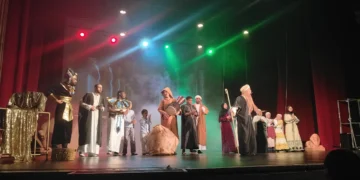
• The Cape Town Minstrel Carnival, rooted in the history of emancipation, is being recognised as a cultural heritage route that honours working-class creativity and resilience.
• December 16, once a symbol of Afrikaner nationalism, has been reframed as the Day of Reconciliation — emphasising unity and healing.
Such transformations illustrate heritage as a dynamic, evolving process grounded in inclusivity and public participation.
Manipulation of history and heritage
Both history and heritage can be manipulated for ideological purposes. Under apartheid, historical narratives were distorted to justify segregation, while monuments and commemorations legitimised white supremacy. Events such as the ‘Great Trek’ and the ‘Covenant at Blood River’, and sites such as the Voortrekker Monument, institutionalised narrow nationalist mythologies.
Post-apartheid scholarship seeks to correct these distortions and restore balanced historical understanding. Similarly, democratic heritage frameworks must strive for inclusivity, acknowledging overlooked cultural practices and confronting uncomfortable truths.
Conclusion
In post-apartheid South Africa, history and heritage are essential to societal transformation. History offers factual clarity; heritage provides the emotional and moral grounding through which societies understand themselves. Both can be manipulated, but through decolonial scholarship — exemplified by Mellet’s work — history and heritage can become tools of justice, inclusion and healing.
The question ‘Whose heritage?’ demands that memory be democratised so that the narratives shaping South Africa’s future are representative, truthful and restorative.
Anwar Omar is a founding member of the Salt River Heritage Society. He holds a master’s degree in Conservation and the Built Environment from the University of Cape Town (UCT) and has recently been appointed as a South African Heritage Resources Agency (SAHRA) councillor.