




















![The market-builder who restrained the market [Part 2]](https://muslimviews.co.za/wp-content/uploads/2026/08/PHOTO-2026-08-25-17-16-32-360x180.jpg)
![The merchant preceding the Prophetic mission [Part 1]](https://muslimviews.co.za/wp-content/uploads/2026/08/01-360x180.jpg)






The central question of this khutbah is: how can we draw on Islam’s guidance to navigate contemporary dhulumāt (injustices) and strive for justice, contentment and spiritual renewal?
By PROFESSOR ASLAM FATAAR
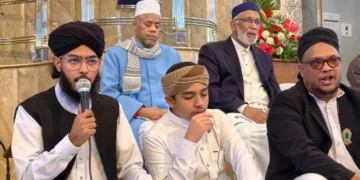
Text of a pre-khutbah delivered on Friday January 24, 2025 at Masjidul Quds, Gatesville.
Jumu’ah renews our commitment to Allah, goodness, and peace. Through remembrance of God (dhikr) in this sacred time (waqt), we recalibrate our moral compass, as Surah Ar-Ra’d reminds us: ‘Indeed, in the remembrance of Allah do hearts find peace’ (Quran 13:28).
Dhikr provides strength to navigate life’s trials – whether they stem from moral uncertainty, trauma, or suffering. Through Allah’s love, we find purpose and a commitment to serve humanity. However, we live amidst widespread injustices – genocide, crises, and disorientation – that make life feel overwhelming.
The Quran uses the term dhulm to describe such darkness or the displacement of divine order. In these moments, believers turn to Allah for guidance, trusting His Qudrah (Power) and divine promise, as declared in Surah Az-Zumar:
‘O My servants who have transgressed against their souls! Do not lose hope in Allah’s mercy, for Allah certainly forgives all sins. He is indeed the All-Forgiving, Most Merciful.’ (Quran 39:53)
This verse reassures us that Allah’s rahmah (mercy) is ever-present, even for those who transgress against their own souls. Such transgression, which harms the self and distances one from Allah, does not close the door to divine mercy. Instead, Allah calls on us not to despair but to seek forgiveness and embark on a redemptive path.
The believer’s response to suffering and transgression is crucial in unlocking Allah’s mercy. Through patience, ethical conduct, and steadfastness, divine mercy manifests in the darkest of times.
The Quran addresses hardship using terms like ḥuzn (sorrow), balaaʾ (trials), and muṣība (calamity). These trials are not punishments but opportunities for renewal, growth, and moral elevation. Islam’s ethical tradition (akhlāqiyyah) equips believers with the spiritual tools needed to maintain balance and hope amidst adversity.
The central question of today’s khutbah is: how can we draw on Islam’s guidance to navigate contemporary dhulumāt (injustices) and strive for justice, contentment, and spiritual renewal?
The concept of Dār al-Ibtilāʾ (Realm of trials and tribulations)
The Quran reminds us in Surah Al-Baqarah: ‘And We will surely test you with fear, hunger, loss of wealth, lives, and fruits of labour. But give glad tidings to those who are patient in adversity.’ (Quran 2:155)
This verse illustrates how life’s circumstances can shift rapidly, testing our resilience and perseverance. The Quran encourages sabr (patience and steadfastness) as a virtue not just for enduring hardships but for actively responding to them through faith, ethical action, and constructive planning.
Prophet Muhammad (SAW) further reinforced this connection between trials and rewards, saying: ‘Indeed, the greatest reward comes with the greatest trial. When Allah loves a people, He tests them.’
Trials test our moral, spiritual, and social selves. These are not meant to destroy us but to refine our character and advance our spiritual journey. Allah declares in Surah Insan: ‘Indeed, We created humans from a drop of mixed fluids to test them, so We made them hearing and seeing’ (Quran 76:2).
Thus, ibtilāʾ (trials) are not mere punishments but divine opportunities for growth and transformation. Resilience during these trials becomes an act of worship (ibadah) that deepens our connection to Allah’s mercy.
Linking Dār al-Ibtilāʾ to the ‘Year of Sorrow’ (ʿĀm al-Ḥuzn)
The concept of Dār al-Ibtilāʾ connects profoundly to the Prophet Muhammad’s experience during the ʿĀm al-Ḥuzn (Year of Sorrow) in 620 CE. Amidst persecution in Makkah, the Prophet faced immense personal loss with the deaths of his beloved wife, Sayyidah Khadījah, and his protective uncle, Abū Ṭālib. These losses left him vulnerable and tested him deeply.
Allah consoled him in these moments of grief: ‘So do not grieve over them, nor be in distress because of their plots’ (Quran 16:127). This divine reassurance fortified the Prophet’s resilience. Shortly thereafter, the Miʿrāj (Night Journey) offered spiritual empowerment and the gift of salaah (prayer) as a means of connection with Allah.
Despite his hardships, the Prophet continued to guide his followers, sending them to Abyssinia for refuge and later establishing a thriving community in Madinah. The ʿĀm al-Ḥuzn exemplifies how faith and divine guidance can transform grief into strength.
Embracing the stranger
Dār al-Ibtilāʾ, the realm of trials and tribulations, calls for resilience, courage, and profound insight. It embodies the perspective of the stranger navigating adversity. As the Prophet Muhammad (peace be upon him) taught in this profound hadith: ‘Islam began as something strange, and it will return to being strange as it began. So, give glad tidings to the strangers.’ When asked, ‘Who are the strangers?’ the Prophet replied, ‘Those who remain righteous when others have succumbed to corruption.’
This concept of the ‘stranger’ represents those who dare to speak truth to power, who challenge the oppressive structures of both 7th-century Makkan oligarchic rule and contemporary manifestations, such as Trumpian oligarchic governance. Strangers are those who recognise their moral responsibility and develop the ethical, moral, and strategic behaviours necessary to confront trials (ibtilāʾ) and sorrow (ḥuzn).
The teaching of embracing strangeness serves as a call to adopt an attitude of inquiry, pursue counterintuitive solutions, and challenge societal norms. This hadith reframes the notion of strangeness as a transformative response to tribulations, urging believers to turn adversity into a foundation for ethical action.
Historicising Dār al-Ibtilāʾ at the Cape of Good Hope
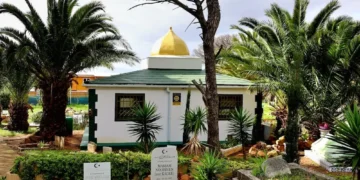
The history of ibtilāʾ at the Cape is filled with resilience and faith. Figures like Shaykh Yusuf, Tuan Guru, and the builders of institutions like the Habibia Soofie Masjid, the Darul Islam Masjid in Surrey Estate and Masjidul-Quds in Gatesville embody this legacy. These pioneers, exiled and oppressed under colonial rule, turned adversity into opportunities for spiritual and communal growth.
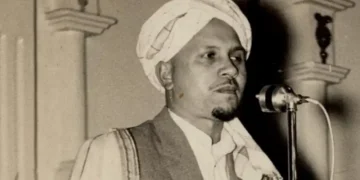
Imām Abdullāh ibn Qāḍī ʿAbdus-Salām (Tuan Guru), exiled to the Cape in 1780, referred to it as Dār al-Ḥuzn (the abode of sorrow). Despite imprisonment, he wrote the Quran from memory, authored Islamic texts, and established the first madrasah, ensuring the preservation of faith and education for generations.
These pioneers exemplify how Dār al-Ibtilāʾ fosters resilience through education, rituals, and communal solidarity, transforming hardship into collective strength.
You may also want to read


Contemporary examples of Dār al-Ibtilāʾ
The Cape Flats reflect Dār al-Ibtilāʾ today, where systemic inequities, gang violence, and poverty challenge communities. Yet, resilience emerges through mosques, churches, cultural initiatives, and grassroots activism, showcasing the power of collective effort and faith.
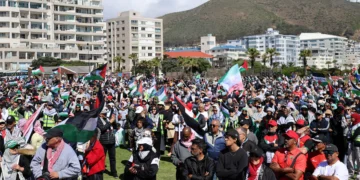
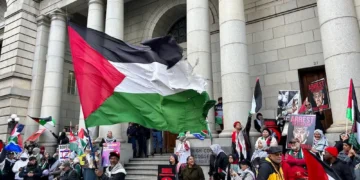
On a global scale, the Gaza corridor stands as a stark Dār al-Ibtilāʾ, marked by relentless occupation and destruction. Yet, the spirit of sumūd (steadfastness) among Palestinians inspires hope and solidarity. South African efforts, like Pro-Palestinain solidarity building, University of Cape Town’s medical training for Gazan students and emergency relief initiatives, reflect meaningful acts of global unity.
Closer to home, the Klipfontein Corridor highlights disparities in health, education, and employment. A response rooted in ghurba (embracing strangeness) and inspired by Dār al-Ibtilāʾ requires establishing equitable care networks. This obligation (wājib) calls for utilising spiritual and moral resources to inform cohesive social action.
Conclusion
Let us face Dār al-Ibtilāʾ with patience, resilience, and compassion, trusting Allah’s promise in Surah Ash-Sharḥ: ‘Verily, with hardship, there is ease’ (Q94:6).
May our faith guide us toward personal growth and collective upliftment, allowing us to transform trials into pathways for spiritual renewal and justice.
Aslam Fataar is Distinguished Professor in Sociology of Education at Stellenbosch University.