













![Does ta’wīl mean interpretation or fulfilment? A Quranic reassessment [+video]](https://muslimviews.co.za/wp-content/uploads/2026/10/Tawil-Kaskas-360x180.webp)




















![Why becoming a wealthy Muslim is commendable in Islam [+videos]](https://muslimviews.co.za/wp-content/uploads/2026/09/Muslim-Trade-Business-1-360x180.webp)






A reflection on khutbahs, communication and community engagement through the lens of the Quranic concept of taʿāruf and meaningful understanding.
By ADNAAN ADAMS
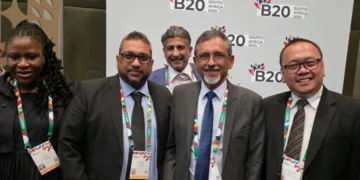
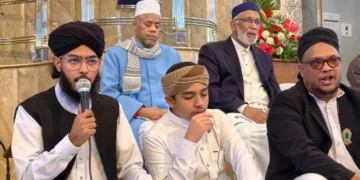
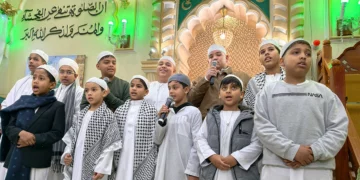
It was a privilege and honour to share a khutbah with the congregation of Masjidut Taqwa, Newfields, on Friday, June 12.
The warmth of Shaykh Ebrahim Floris, the trustees, and the wider community was deeply appreciated and made the engagement both welcoming and meaningful. I am particularly grateful for the encouragement and kind words offered by the Imam following the khutbah. Such opportunities remind us that the mosque remains not only a place of worship, but also a space for reflection, learning, and collective engagement with the moral and social questions of our time.
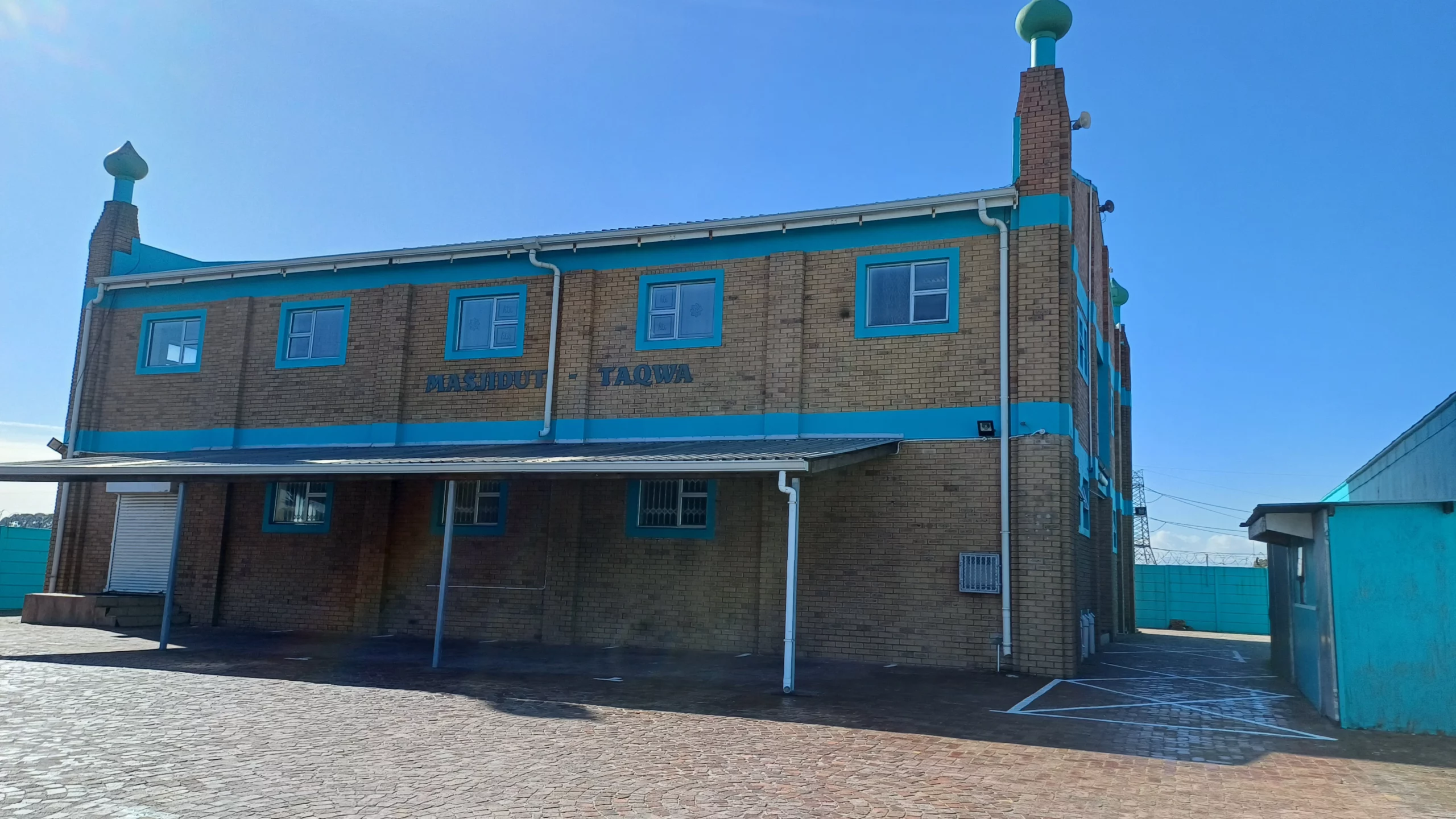
As I left the mosque, I found myself reflecting not on what I had said, but on what I may have left unsaid.
More importantly, I found myself asking a different question. Did the khutbah truly connect?
That question carries particular significance because the intellectual spine of the khutbah was drawn from Allah’s words in the Holy Quran: ‘We made you into nations and tribes so that you may come to know one another.’ (Sura Al-Hujurat, 49:13)
The Quranic concept of taʿāruf is often translated as ‘knowing one another’, but it points to something far deeper. It suggests understanding, recognition, engagement, learning, and meaningful encounter. It is a form of associative knowing through which people come to appreciate one another, understand one another, and locate themselves in relation to one another. In many ways, the khutbah itself was an exercise in taʿāruf. It was not simply a presentation delivered to a congregation. It was an encounter between a speaker and a community.
As presenters, speakers, Imams, and educators, we often evaluate our contribution by the quality of our preparation. We ask whether our arguments were coherent, whether our references were accurate, whether our delivery was effective, and whether our conclusions were persuasive. These are important questions. But perhaps they are not the most important questions.
The more important question may be whether the community was able to journey with us. Or, to frame it differently, did the khutbah become an act of taʿāruf between speaker and community? Did we truly come to know and understand one another through the encounter?
You may also want to read


A khutbah is not an academic paper. It is not a university lecture. It is not merely the transmission of information. It is an encounter between a speaker and a community. It seeks not only to inform but to illuminate; not only to explain but to inspire; not only to persuade but to transform.
In hindsight, I wonder whether some of the concepts could have been simplified further. The khutbah explored themes of knowledge, understanding, taqwa, justice, Palestine, and moral responsibility. While these themes are important, perhaps a simpler summary of the central argument, repeated at key moments, may have enabled greater accessibility and deeper communal engagement.
This is not a criticism of the congregation. It is a recognition that communication is a shared responsibility. Understanding does not depend only on the listener. It also depends on the speaker’s ability to make complex ideas accessible without losing their depth. The challenge is not whether people hear us, but whether they understand and retain what is shared. Put differently, the measure of a khutbah is not what is said from the mimbar, but what remains with the congregation after they leave the mosque.
This reflection also raises another important question. How do we know whether a khutbah has been effective? Too often we rely on anecdotal comments, casual compliments, or our own assumptions. While these have value, they seldom provide meaningful insight into how a community is receiving, understanding, and engaging with what is being presented. Would a brief survey help? Would a simple questionnaire offer valuable feedback? Would it help us understand which themes resonate, which ideas remain unclear, and which issues require further engagement? Such feedback may help ensure that the khutbah remains not only a space of instruction, but also a space of understanding, relevance, and transformation. It could contribute to improving the overall standard of khutbahs and community engagement.
This is particularly important if we take seriously the vision of The Muslim Thinker. At its heart, The Muslim Thinker seeks to cultivate reflective communities, informed citizenship, ethical leadership, and meaningful public engagement. If these are our aspirations, then we too must be willing to subject our own work to reflection, evaluation, and critique. The community deserves nothing less.
The khutbah remains one of the most important educational spaces in Muslim life. Every week hundreds, and sometimes thousands, gather to listen, learn, reflect, and reconnect with Allah. The significance of the khutbah should compel us to continually ask whether we are communicating well, whether we are addressing the realities people face, and whether we are nurturing both faith and understanding.
Critical reflection is therefore not a sign of failure. It is a sign of responsibility. To reflect on a khutbah is not to diminish it. In fact, it is to honour it. To question whether we connected is not to doubt ourselves. It is to take the community seriously. And perhaps that is the lesson I carry from Masjidut Taqwa, Newfields.
The enduring question is not whether the khutbah was delivered effectively, but whether it became an act of taʿāruf between speaker and community. Whether understanding moved in both directions. Whether the ideas shared found resonance within the lived realities of the congregation, and whether the congregation in turn deepened the speaker’s (my own) understanding of the community he (I) sought to serve. The task is therefore not only to prepare better. The task is to listen better, to understand better, and to engage better and, of course, to serve the community better.
For if taʿāruf is a Quranic invitation to meaningful understanding, then every khutbah should aspire to be more than a speech. It should become a shared journey of learning, reflection, and moral growth.
And if we ask communities to reflect on themselves, we must first be willing to reflect on ourselves.
The reflections on taʿāruf in this article draw inspiration from Professor Yusef Waghid’s chapter, “Rethinking Education in Contemporary Times: Learning from Taʿāruf,” in Prophet Muhammad at 1500 (edited by Aslam Fataar). His conception of taʿāruf as a form of associative knowing helped shape the questions explored in this reflection.
Adnaan Adams is the founder of The Muslim Thinker. Website: www.themuslimthinker.org He can be contacted on 083 687 0559.