











![Does ta’wīl mean interpretation or fulfilment? A Quranic reassessment [+video]](https://muslimviews.co.za/wp-content/uploads/2026/10/Tawil-Kaskas-360x180.webp)



















![Why becoming a wealthy Muslim is commendable in Islam [+videos]](https://muslimviews.co.za/wp-content/uploads/2026/09/Muslim-Trade-Business-1-360x180.webp)






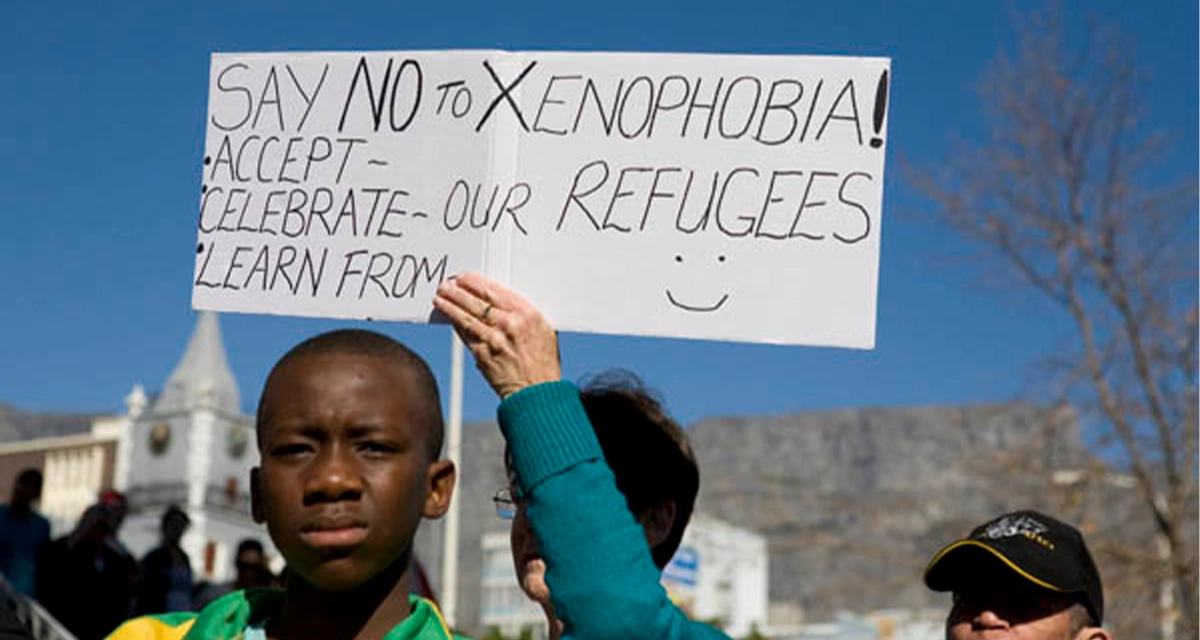

The Muslim Judicial Council has called for a balanced national approach to migration, combining lawful immigration enforcement with human dignity, social cohesion and constitutional values.
The Muslim Judicial Council (MJC-SA) herewith provides its considered view on the escalating tensions surrounding migration, public demonstrations, and the growing prevalence of xenophobic rhetoric within certain sectors of society.
The current national discourse demands constitutional fidelity and a principled commitment to social cohesion.
The MJC recognises that South Africans are entitled to legitimate concerns regarding border management, unlawful immigration, increasing pressure on public infrastructure, unemployment, crime, and deficiencies within state institutions. These concerns cannot be dismissed or ignored. Equally, however, such concerns cannot serve as a legal or moral justification for hostility, intimidation, discrimination, or collective punishment directed at any individual or community.
South Africa’s constitutional order is founded upon the inseparable principles of legality, human dignity, equality, and accountability. The protection of human rights and the enforcement of immigration laws are not competing objectives. Rather, they are complementary obligations that must be pursued simultaneously by a capable and responsive state.
The present circumstances ought not to be characterised solely as an immigration issue. They are indicative of broader governance deficiencies that require comprehensive intervention. Inefficiencies in administrative systems, corruption, inconsistent enforcement mechanisms, inadequate regional cooperation, and socio-economic pressures have collectively contributed to heightened tensions within communities.
The consequences of these systemic shortcomings should not be transferred onto vulnerable populations or be exploited to precipitate division.
The MJC therefore rejects both unlawful migration and unlawful responses to migration. No person may be permitted to remain outside the ambit of the law, yet equally, no person may be deprived of their dignity, safety, or fundamental rights by reason of their nationality, ethnicity, or migration status. South Africa requires a balanced, evidence-based, and future-orientated approach that shifts us as a nation beyond reactionary measures and political expediency.
In this regard, the MJC sees as a solution the embracing of a three-pronged national framework.
One is firm legality, requiring the state to modernise immigration systems, strengthen border management, eradicate corruption, expedite lawful documentation processes, and ensure consistent enforcement of immigration legislation.
You may also want to read




Two is the embracing of human dignity, requiring that every individual within South Africa’s borders be treated in accordance with constitutional guarantees and international human rights principles, irrespective of nationality. Enforcement measures must always remain lawful, proportionate, and free from discrimination.
Three is social cohesion and economic integration, requiring sustained investment in local communities, job creation, skills development, and regional partnerships with African states to address the underlying conditions that compel migration in the first instance.
As a faith-based institution, the MJC cautions against simplistic narratives that seek to assign blame to a single group for complex socio-economic realities. South Africa’s challenges are multifaceted and require mature and coordinated solutions. At this critical juncture, the nation requires leadership that is resolute in upholding the law, uncompromising in confronting corruption, compassionate in protecting human dignity, and visionary in ensuring a united society. The path forward cannot be one of exclusion or disorder.
In light of these postulations, the MJC therefore calls upon all communities to reject inflammatory rhetoric, refrain from acts of vigilantism, and support lawful processes that preserve public order while ensuring the rights of all persons as enshrined in the Constitution of the Republic of South Africa, 1996.
South Africa’s future will not be secured through fear or division. It will be secured through principled leadership and a collective commitment to building a society founded upon justice and peaceful coexistence.
Issued by MJC Media, June 22, 2026