









































By ALI SALIE
A conversation with Kenyan podcaster Maya Ali reveals a shared challenge for African Muslim communities and an opening for partnerships built on knowledge and trust. It shows why access to products must go hand in hand with understanding.
When I asked Maya Ali why she had started collecting Muslim money stories, her answer exposed a gap that a new financial product alone cannot fill. She enjoyed listening to other people explain how they built businesses and managed money. Yet the conversations often assumed that borrowing on interest was an ordinary step towards success. She wanted stories that spoke to the decisions she faced as a Muslim.
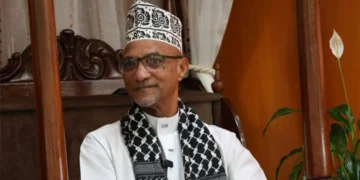
Maya hosts the Islamically Correct Podcast in Kenya. In our MuslimFin Podcast conversation, she described the need to discuss earning, saving and enterprise alongside faith. Speaking from South Africa, I recognised the tension. A business owner can be resourceful and commercially successful while still struggling to find financial arrangements that fit the values they practise at home.
Why Kenya needs Muslim money stories
Different markets with a familiar gap
That shared experience should make us curious about each other’s markets. South Africa has providers offering Islamic banking, property finance and investment solutions. Kenya also has established Islamic financial institutions. First National Bank’s published South African offering includes Islamic residential and commercial property finance. Gulf African Bank’s Kenyan offering includes business and project financing. These examples establish that formal options exist in both countries. They do not establish that every household knows about them or can access them.
In the interview, I outlined the range of arrangements familiar to South African clients. Maya brought the discussion back to the Kenyan customer who does not know what to ask for. Her account challenges an easy assumption about market development. A product can be available while remaining distant from the person it was designed to serve.
The comparison calls for care. Neither speaker’s experience can describe every customer in either country. Providers serve different needs, and a household looking for a bank account faces different questions from an entrepreneur seeking business finance. Useful cooperation starts by identifying the particular gap and listening to the people affected by it.
The finance already happening between people
Maya described community members pooling money to help someone facing a financial problem, with the money subsequently repaid without interest. She also spoke about people combining resources for property. These were accounts of practices within communities she knows, rather than a survey of Kenya’s entire financial system. Their importance lies in the purpose they serve and the relationships that sustain them.
Families and entrepreneurs are already finding ways to mobilise savings, share opportunities and respond to need. Formal institutions should listen closely to those experiences. Useful questions follow. How are contributions recorded? Who decides when money is released? What happens when repayment is delayed? Clear records and agreed responsibilities can help people preserve relationships when circumstances change. A familiar face alone cannot answer every financial question.
How Kenyan communities pool money
Growth has to reach the person outside the circle
When I asked Maya what she had learned from her guests, she raised another difficulty. Knowledge about creating wealth can remain within a small circle. Someone outside that circle, particularly a young person, may hear the success story without learning the practical steps, risks or mistakes behind it. Her podcast creates space for those details to be discussed.
This is an important test for Islamic finance in both countries. Growth should be visible in people’s ability to understand a contract, compare costs and ask informed questions. A young worker starting to save and a family business planning its next stage need explanations they can use. More accessible education can widen participation before a person has substantial wealth or an introduction to the right network.
South Africa and Kenya share an awareness gap
Trust needs an explanation people can inspect
Maya repeatedly returned to due diligence. People can hesitate because they fear making a religious mistake, losing money or trusting the wrong institution. During our conversation, I recognised similar concerns among South African Muslims. A longer history of formal products can help establish familiarity, but each provider still needs to explain what it does and how it is accountable.
Customers should be able to ask who manages their money, what they own, how charges work, what risks they bear and how they can exit. Questions about Shariah supervision deserve clear answers from the appropriate specialists. Financial literacy also requires honesty about uncertainty. Every customer should be able to distinguish an investment risk from a promise and a marketing description from the terms of a contract.
An African opportunity built with local partners
You may also want to read





Our exchange suggests a practical route for cooperation. South African experience in financial planning, investment administration and client education could support partnerships with Kenyan practitioners who understand their own communities. Maya’s perspective matters precisely because local knowledge shapes the questions people ask and the explanations they trust. Listening should precede designing a solution.
There is room to explore joint workshops, locally relevant learning material and exchanges between practitioners before considering capital commitments. Such work would let communities describe the problems they need solved. It would also help potential partners test whether their skills and expectations fit. An investment relationship is easier to assess when the parties have already learned how the other works.
This also opens a wider question for South African families and businesses considering investment elsewhere in Africa. Kenya deserves serious investigation as a potential partner and market. That is an editorial conclusion I draw from the conversation, rather than an investment proposal Maya and I assessed. Possible areas to investigate include financing productive businesses and property, supported by competent local partners and transparent governance.
Any actual transaction needs its own assessment. Investors should examine the business, ownership rights, financial records, currency exposure, taxation, local law and realistic exit options. South African exchange-control requirements also apply. The South African Reserve Bank directs relevant applications through an Authorised Dealer. The rules for an individual, company or institution depend on the proposed transaction. Shared faith can encourage an introduction. The investment still needs evidence, appropriate authority and scrutiny.
What is holding back awareness in Kenya
Making the next conversation easier
When we discussed the responsibility of educating people, Maya acknowledged how much she herself still has to learn. That willingness to keep learning is a useful starting point for institutions and advisers too. Better questions can reveal where language is confusing, where customers feel excluded and where a service needs to improve.
Why local knowledge matters across Africa
The opportunity for Islamic finance in Africa begins with people who want to build a livelihood while honouring their faith. Our conversation connected experiences in Kenya and South Africa. Continuing that exchange, through education and carefully assessed partnerships, can help families make more informed decisions about the wealth they work so hard to create.
Ali Salie is chief executive officer, director and advisory partner of MuslimFin Family Office and host of the MuslimFin Podcast. Readers can contact him at ali@muslimfin.co.za or visit muslimfin.co.za/calendar-ali to request a conversation.
This article offers general education. Personal financial, legal, tax and Shariah questions require advice appropriate to the reader and the relevant jurisdiction.
Watch the full conversation with Maya Ali
Explore MuslimFin Family Office
Subscribe to the MuslimFin YouTube channel


