




Muslim Views
No Result
View All Result
  • News
    • All
    • Local
    • National
    • World
    Police who tortured barber remain on active duty despite CCTV evidence

    Police who tortured barber remain on active duty despite CCTV evidence

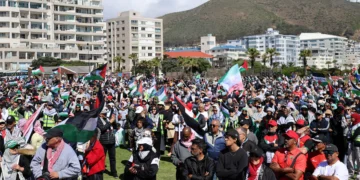
    Dozens of people picketed outside the British Consulate in Cape Town on Tuesday afternoon. (Photo: Matthew Hirsch)

    Protesters demand release of Palestine Action hunger strikers in UK

    Islamic art, biodiversity, and belonging in the Cape Floristic Region

    Islamic art, biodiversity, and belonging in the Cape Floristic Region

    Cape Town couple brings spirit of Ramadan to young readers

    Cape Town couple brings spirit of Ramadan to young readers

    CodeGirls launches thirty women into tech careers

    CodeGirls launches thirty women into tech careers

    Indonesia to build Shaykh Yusuf Cultural House in Macassar

    Indonesia to build Shaykh Yusuf Cultural House in Macassar

    Grand Parade traders protest City restrictions

    Grand Parade traders protest City restrictions

    Disability groups demand urgent transport reform

    Disability groups demand urgent transport reform

    Cape Town raises the curtain on Shakespeare and the Muslim world

    Cape Town raises the curtain on Shakespeare and the Muslim world

    Ummah Tech Conference 2025: Building a digital Madinah through faith-driven innovation

    Ummah Tech Conference 2025: Building a digital Madinah through faith-driven innovation

    • National
    • World
    • Local
  • Opinion
    • All
    • Columnists
    • Discussions with Dangor
    • Editorial
    • Guest Writer
    Regime change as theology: Why neoconservatives remain obsessed with Iran

    Regime change as theology: Why neoconservatives remain obsessed with Iran

    BRICS 2026: Can India lead the Global South amid Trump’s trade wars and UN crisis?

    BRICS 2026: Can India lead the Global South amid Trump’s trade wars and UN crisis?

    The Marriage Bill and the Muslim community: why Parliament must honour its commitments

    The Marriage Bill and the Muslim community: why Parliament must honour its commitments

    From Pakistan to Gaza: Why Senator Mushtaq Ahmad Khan terrifies power and Zionism

    From Pakistan to Gaza: Why Senator Mushtaq Ahmad Khan terrifies power and Zionism

    Cowboy capitalism and the assault on Venezuela’s sovereignty

    Cowboy capitalism and the assault on Venezuela’s sovereignty

    Labour Court victory for Wesley Neumann a triumph for justice and a tribute to courage

    Labour Court victory for Wesley Neumann a triumph for justice and a tribute to courage

    Pakistan and the Gulf: the illusion of balance under Zionism

    Pakistan and the Gulf: the illusion of balance under Zionism

    Tunisia’s democratic collapse: from Arab Spring hope to authoritarian rule

    Tunisia’s democratic collapse: from Arab Spring hope to authoritarian rule

    Father Munther Isaac at Masjidul Quds: A faithful voice of justice and interfaith solidarity

    Father Munther Isaac at Masjidul Quds: A faithful voice of justice and interfaith solidarity

    Bearing witness and a moral record of 2025

    Bearing witness and a moral record of 2025

  • Features
    • All
    • 1500 Years of Prophetic Legacy
    • AWQAF SA
    • General Features
    • Imam Haron
    • Tributes
    Die Afhaal: A Cape Muslim wedding practice that centres dignity, consent and care

    Die Afhaal: A Cape Muslim wedding practice that centres dignity, consent and care

    Maqasid-based leadership: The enduring legacy of Maulana Shafee Okarvi

    Maqasid-based leadership: The enduring legacy of Maulana Shafee Okarvi

    The taxation of awqaf: Balancing faith, charity and public finance

    The taxation of awqaf: Balancing faith, charity and public finance

    Mapping the memory of the Vlakte: Workshop charts path to restitution and active citizenship

    Remembering Mogamat Cassiem Ras: Die Vlakte, memory, and the ethics of living with integrity

    Heritage and human rights: Decolonial reflections from the Cape Floral Region

    Heritage and human rights: Decolonial reflections from the Cape Floral Region

    Prophetic Legacy Essay Challenge celebrates youth voices and ethical scholarship

    Prophetic Legacy Essay Challenge celebrates youth voices and ethical scholarship

    History vs heritage: Why South Africa’s past still shapes its future

    History vs heritage: Why South Africa’s past still shapes its future

    Tracing the Kara family through memory and archive

    Tracing the Kara family through memory and archive

    Clergy and activists on the step of St George’s Cathedral.

    A Journey of Witness — Dr Fatima Hendricks and the return of a moral language

    Seventy years on – The enduring legacy of Imam Abdullah Haron

    Seventy years on – The enduring legacy of Imam Abdullah Haron

    The Sumud of direct non-violent action

    The Sumud of direct non-violent action

    Tribute to a dedicated doctor, life-long student and peer

    Tribute to a dedicated doctor, life-long student and peer

    Scholars assert Prophetic guidance amid Africa’s deepening crises

    Scholars assert Prophetic guidance amid Africa’s deepening crises

    Reflections of Islamic legacy through Africa

    Reflections of Islamic legacy through Africa

    A Prophetic pedagogy for a world on fire

    A Prophetic pedagogy for a world on fire

  • Lifestyle
    • All
    • Arts
    • Books
    • Education
    • Food
    • Health
    • Motoring
    • Sport
    • Technology
    How Cape Muslim heritage took root in Johannesburg’s Newclare

    How Cape Muslim heritage took root in Johannesburg’s Newclare

    Die Afhaal: A Cape Muslim wedding practice that centres dignity, consent and care

    Die Afhaal: A Cape Muslim wedding practice that centres dignity, consent and care

    Labour Court victory for Wesley Neumann a triumph for justice and a tribute to courage

    Labour Court victory for Wesley Neumann a triumph for justice and a tribute to courage

    Why handwriting still matters in a digital age

    Why handwriting still matters in a digital age

    Beyond cricket: Awqaf SA’s youth tournament links sport, education, and social impact

    Beyond cricket: Awqaf SA’s youth tournament links sport, education, and social impact

    Islamic art, biodiversity, and belonging in the Cape Floristic Region

    Islamic art, biodiversity, and belonging in the Cape Floristic Region

    Cape Town couple brings spirit of Ramadan to young readers

    Cape Town couple brings spirit of Ramadan to young readers

    Why South Africa’s education reform must start in early childhood

    Why South Africa’s education reform must start in early childhood

    Ummah Tech Conference 2025: Building a digital Madinah through faith-driven innovation

    Ummah Tech Conference 2025: Building a digital Madinah through faith-driven innovation

    Dr D’arcy’s enduring message: look closely, care deeply, create fearlessly

    Dr D’arcy’s enduring message: look closely, care deeply, create fearlessly

  • Finance
    • All
    • Islamic Finance
    Islamic banking in South Africa: Ethical finance or interest by another name?

    Islamic banking in South Africa: Ethical finance or interest by another name?

    How MuslimFin serves SA Muslims and its global diaspora

    How MuslimFin serves SA Muslims and its global diaspora

    Oasis Crescent Property Fund predicts promising future

    Oasis Crescent Property Fund predicts promising future

    Breaking the chains of economic slavery

    Breaking the chains of economic slavery

    SARS’s estimated assessments: A growing risk for taxpayers

    SARS’s estimated assessments: A growing risk for taxpayers

    Uniting wealth with purpose: The untapped power of a united Muslim economy

    Uniting wealth with purpose: The untapped power of a united Muslim economy

    Metals shine in 2025’s first half: Platinum, palladium and gold lead the charge

    Metals shine in 2025’s first half: Platinum, palladium and gold lead the charge

    AI in banking and finance: The Islamic finance perspective in South Africa

    AI in banking and finance: The Islamic finance perspective in South Africa

    From the Cape to Gaza: A coin for freedom

    From the Cape to Gaza: A coin for freedom

    The enduring value of money in Islam: Gold, silver and the future of Islamic Finance in SA

    The enduring value of money in Islam: Gold, silver and the future of Islamic Finance in SA

  • Islam
    • All
    • Eid
    • Faith and Practice
    • Family
    • Hajj and Umrah
    • Moulood
    • Quran
    • Ramadaan
    Die Afhaal: A Cape Muslim wedding practice that centres dignity, consent and care

    Die Afhaal: A Cape Muslim wedding practice that centres dignity, consent and care

    Khwaja Mu’in al-Din Chishti’s spiritual legacy in South Asia and beyond

    Khwaja Mu’in al-Din Chishti’s spiritual legacy in South Asia and beyond

    From Gaza to Sudan: Justice has no borders

    From Gaza to Sudan: Justice has no borders

    Tracing the Kara family through memory and archive

    Tracing the Kara family through memory and archive

    Re-membering in forgetting: The ethical response to fitan – trials, tumult and oppression

    Re-membering in forgetting: The ethical response to fitan – trials, tumult and oppression

    A Qur’anic maqāsidi critique of Ramaphosa’s food security address

    A Qur’anic maqāsidi critique of Ramaphosa’s food security address

    The legacy of Pope Francis in Muslim–Christian relations

    The legacy of Pope Francis in Muslim–Christian relations

    Neighbourly ethics in a time of testing

    Neighbourly ethics in a time of testing

    Sirah course provides roadmap for cultivating character and deepening faith

    Sirah course provides roadmap for cultivating character and deepening faith

    Seventy years on – The enduring legacy of Imam Abdullah Haron

    Seventy years on – The enduring legacy of Imam Abdullah Haron

  • Archives
  • Donate
Muslim Views
  • News
    • All
    • Local
    • National
    • World
    Police who tortured barber remain on active duty despite CCTV evidence

    Police who tortured barber remain on active duty despite CCTV evidence

    Dozens of people picketed outside the British Consulate in Cape Town on Tuesday afternoon. (Photo: Matthew Hirsch)

    Protesters demand release of Palestine Action hunger strikers in UK

    Islamic art, biodiversity, and belonging in the Cape Floristic Region

    Islamic art, biodiversity, and belonging in the Cape Floristic Region

    Cape Town couple brings spirit of Ramadan to young readers

    Cape Town couple brings spirit of Ramadan to young readers

    CodeGirls launches thirty women into tech careers

    CodeGirls launches thirty women into tech careers

    Indonesia to build Shaykh Yusuf Cultural House in Macassar

    Indonesia to build Shaykh Yusuf Cultural House in Macassar

    Grand Parade traders protest City restrictions

    Grand Parade traders protest City restrictions

    Disability groups demand urgent transport reform

    Disability groups demand urgent transport reform

    Cape Town raises the curtain on Shakespeare and the Muslim world

    Cape Town raises the curtain on Shakespeare and the Muslim world

    Ummah Tech Conference 2025: Building a digital Madinah through faith-driven innovation

    Ummah Tech Conference 2025: Building a digital Madinah through faith-driven innovation

    • National
    • World
    • Local
  • Opinion
    • All
    • Columnists
    • Discussions with Dangor
    • Editorial
    • Guest Writer
    Regime change as theology: Why neoconservatives remain obsessed with Iran

    Regime change as theology: Why neoconservatives remain obsessed with Iran

    BRICS 2026: Can India lead the Global South amid Trump’s trade wars and UN crisis?

    BRICS 2026: Can India lead the Global South amid Trump’s trade wars and UN crisis?

    The Marriage Bill and the Muslim community: why Parliament must honour its commitments

    The Marriage Bill and the Muslim community: why Parliament must honour its commitments

    From Pakistan to Gaza: Why Senator Mushtaq Ahmad Khan terrifies power and Zionism

    From Pakistan to Gaza: Why Senator Mushtaq Ahmad Khan terrifies power and Zionism

    Cowboy capitalism and the assault on Venezuela’s sovereignty

    Cowboy capitalism and the assault on Venezuela’s sovereignty

    Labour Court victory for Wesley Neumann a triumph for justice and a tribute to courage

    Labour Court victory for Wesley Neumann a triumph for justice and a tribute to courage

    Pakistan and the Gulf: the illusion of balance under Zionism

    Pakistan and the Gulf: the illusion of balance under Zionism

    Tunisia’s democratic collapse: from Arab Spring hope to authoritarian rule

    Tunisia’s democratic collapse: from Arab Spring hope to authoritarian rule

    Father Munther Isaac at Masjidul Quds: A faithful voice of justice and interfaith solidarity

    Father Munther Isaac at Masjidul Quds: A faithful voice of justice and interfaith solidarity

    Bearing witness and a moral record of 2025

    Bearing witness and a moral record of 2025

  • Features
    • All
    • 1500 Years of Prophetic Legacy
    • AWQAF SA
    • General Features
    • Imam Haron
    • Tributes
    Die Afhaal: A Cape Muslim wedding practice that centres dignity, consent and care

    Die Afhaal: A Cape Muslim wedding practice that centres dignity, consent and care

    Maqasid-based leadership: The enduring legacy of Maulana Shafee Okarvi

    Maqasid-based leadership: The enduring legacy of Maulana Shafee Okarvi

    The taxation of awqaf: Balancing faith, charity and public finance

    The taxation of awqaf: Balancing faith, charity and public finance

    Mapping the memory of the Vlakte: Workshop charts path to restitution and active citizenship

    Remembering Mogamat Cassiem Ras: Die Vlakte, memory, and the ethics of living with integrity

    Heritage and human rights: Decolonial reflections from the Cape Floral Region

    Heritage and human rights: Decolonial reflections from the Cape Floral Region

    Prophetic Legacy Essay Challenge celebrates youth voices and ethical scholarship

    Prophetic Legacy Essay Challenge celebrates youth voices and ethical scholarship

    History vs heritage: Why South Africa’s past still shapes its future

    History vs heritage: Why South Africa’s past still shapes its future

    Tracing the Kara family through memory and archive

    Tracing the Kara family through memory and archive

    Clergy and activists on the step of St George’s Cathedral.

    A Journey of Witness — Dr Fatima Hendricks and the return of a moral language

    Seventy years on – The enduring legacy of Imam Abdullah Haron

    Seventy years on – The enduring legacy of Imam Abdullah Haron

    The Sumud of direct non-violent action

    The Sumud of direct non-violent action

    Tribute to a dedicated doctor, life-long student and peer

    Tribute to a dedicated doctor, life-long student and peer

    Scholars assert Prophetic guidance amid Africa’s deepening crises

    Scholars assert Prophetic guidance amid Africa’s deepening crises

    Reflections of Islamic legacy through Africa

    Reflections of Islamic legacy through Africa

    A Prophetic pedagogy for a world on fire

    A Prophetic pedagogy for a world on fire

  • Lifestyle
    • All
    • Arts
    • Books
    • Education
    • Food
    • Health
    • Motoring
    • Sport
    • Technology
    How Cape Muslim heritage took root in Johannesburg’s Newclare

    How Cape Muslim heritage took root in Johannesburg’s Newclare

    Die Afhaal: A Cape Muslim wedding practice that centres dignity, consent and care

    Die Afhaal: A Cape Muslim wedding practice that centres dignity, consent and care

    Labour Court victory for Wesley Neumann a triumph for justice and a tribute to courage

    Labour Court victory for Wesley Neumann a triumph for justice and a tribute to courage

    Why handwriting still matters in a digital age

    Why handwriting still matters in a digital age

    Beyond cricket: Awqaf SA’s youth tournament links sport, education, and social impact

    Beyond cricket: Awqaf SA’s youth tournament links sport, education, and social impact

    Islamic art, biodiversity, and belonging in the Cape Floristic Region

    Islamic art, biodiversity, and belonging in the Cape Floristic Region

    Cape Town couple brings spirit of Ramadan to young readers

    Cape Town couple brings spirit of Ramadan to young readers

    Why South Africa’s education reform must start in early childhood

    Why South Africa’s education reform must start in early childhood

    Ummah Tech Conference 2025: Building a digital Madinah through faith-driven innovation

    Ummah Tech Conference 2025: Building a digital Madinah through faith-driven innovation

    Dr D’arcy’s enduring message: look closely, care deeply, create fearlessly

    Dr D’arcy’s enduring message: look closely, care deeply, create fearlessly

  • Finance
    • All
    • Islamic Finance
    Islamic banking in South Africa: Ethical finance or interest by another name?

    Islamic banking in South Africa: Ethical finance or interest by another name?

    How MuslimFin serves SA Muslims and its global diaspora

    How MuslimFin serves SA Muslims and its global diaspora

    Oasis Crescent Property Fund predicts promising future

    Oasis Crescent Property Fund predicts promising future

    Breaking the chains of economic slavery

    Breaking the chains of economic slavery

    SARS’s estimated assessments: A growing risk for taxpayers

    SARS’s estimated assessments: A growing risk for taxpayers

    Uniting wealth with purpose: The untapped power of a united Muslim economy

    Uniting wealth with purpose: The untapped power of a united Muslim economy

    Metals shine in 2025’s first half: Platinum, palladium and gold lead the charge

    Metals shine in 2025’s first half: Platinum, palladium and gold lead the charge

    AI in banking and finance: The Islamic finance perspective in South Africa

    AI in banking and finance: The Islamic finance perspective in South Africa

    From the Cape to Gaza: A coin for freedom

    From the Cape to Gaza: A coin for freedom

    The enduring value of money in Islam: Gold, silver and the future of Islamic Finance in SA

    The enduring value of money in Islam: Gold, silver and the future of Islamic Finance in SA

  • Islam
    • All
    • Eid
    • Faith and Practice
    • Family
    • Hajj and Umrah
    • Moulood
    • Quran
    • Ramadaan
    Die Afhaal: A Cape Muslim wedding practice that centres dignity, consent and care

    Die Afhaal: A Cape Muslim wedding practice that centres dignity, consent and care

    Khwaja Mu’in al-Din Chishti’s spiritual legacy in South Asia and beyond

    Khwaja Mu’in al-Din Chishti’s spiritual legacy in South Asia and beyond

    From Gaza to Sudan: Justice has no borders

    From Gaza to Sudan: Justice has no borders

    Tracing the Kara family through memory and archive

    Tracing the Kara family through memory and archive

    Re-membering in forgetting: The ethical response to fitan – trials, tumult and oppression

    Re-membering in forgetting: The ethical response to fitan – trials, tumult and oppression

    A Qur’anic maqāsidi critique of Ramaphosa’s food security address

    A Qur’anic maqāsidi critique of Ramaphosa’s food security address

    The legacy of Pope Francis in Muslim–Christian relations

    The legacy of Pope Francis in Muslim–Christian relations

    Neighbourly ethics in a time of testing

    Neighbourly ethics in a time of testing

    Sirah course provides roadmap for cultivating character and deepening faith

    Sirah course provides roadmap for cultivating character and deepening faith

    Seventy years on – The enduring legacy of Imam Abdullah Haron

    Seventy years on – The enduring legacy of Imam Abdullah Haron

  • Archives
  • Donate
Muslim Views
Advertisement

Resilience and faith: American Muslims navigating the Trump 2.0 era

9 May 2025
in Faith and Practice
Reading Time: 12 mins read
A A
Resilience and faith: American Muslims navigating the Trump 2.0 era

Muslim women leading a march in Washington DC. Imam Rashied Omar points out that while Donald Trump’s second term as President has reignited a wave of hostility, there is a new and determined resolve among younger generations of American Muslims to resist marginalisation and to speak out with courage and clarity. (Photo PHIL PASQUIN / SHUTTERSTOCK)

Share on TwitterShare on FacebookShare on Whatsapp

The first hundred days of ‘Trump 2.0’ have reignited a wave of hostility that many American Muslims had prayed and hoped were receding into the past. Yet, this time, there is a crucial difference. There is a new and determined resolve among younger generations of American Muslims, to resist marginalisation and to speak out with courage and clarity.

Khutbah delivered at Claremont Main Road Masjid, Cape Town on Friday May 9, 2025.

By IMAM DR ABDUR RASHIED OMAR

I begin this khutbah with a deep sense of relief and heartfelt gratitude to Allah, the Exalted and Most-High, for blessing my wife Leila and me with a safe return to our beloved Cape Town following my four-month annual teaching sabbatical in the United States of America.

This year, our time in America coincided with a deeply troubling political development: it coincided with the first one hundred days of President Donald Trump’s second term in office, an era that many have ominously come to refer to as ‘Trump 2.0’.

During this turbulent period, the Trump administration, amid its broader assaults on democratic institutions intensified its attack on academic freedom. Universities, international students, and scholars were specifically targeted through a disturbing combination of censorship, surveillance, arbitrary arrests, and deportations. Some of you may have across harrowing reports of students being detained and faculty members summarily dismissed, abruptly stripped of access to their classrooms, research and livelihoods.

In an even more alarming and chilling development, the federal government began threatening academic institutions with the revocation of their tax-exempt status, an unprecedented and coercive tactic aimed at punishing institutions of higher learning for their commitment to critical inquiry, inclusive education, and social justice.

The message was unmistakable: dissent would not be tolerated, and the pursuit of truth and justice would carry a cost. It was, without question, a profoundly tense and unsettling time for me as an international scholar living in the United States. And so, we return home not only with immense gratitude, but with a deep and abiding sense of relief.

A renewed climate of fear and resistance

The first hundred days of ‘Trump 2.0’ have reignited a wave of hostility that many American Muslims had prayed and hoped were receding into the past. These past months have been marked by widespread anxiety and fear, particularly among immigrants, people of colour, and Muslim communities. Islamophobic rhetoric has once again been weaponised in US politics, stoking fear and division. Immigration policies have grown more draconian, surveillance of Muslim spaces is on the rise, and a climate of fear reminiscent of the post-9/11 era has returned.

Yet, this time, there is a crucial difference. There is a new and determined resolve among younger generations of American Muslims, to resist marginalisation and to speak out with courage and clarity. A new generation of American Muslims is refusing to be silenced or sidelined. With remarkable clarity and courage, they are rising to assert their dignity, to reclaim their narratives, and to stand firm in the face of fear. It is a defiant hope, grounded in faith, justice, and the unshakable belief that they belong.

A powerful embodiment of this spirit was the courageous statement made by Mohammad Zaman, a young university student and activist, shortly after his release from detention for participating in a peaceful pro-Palestinian demonstration on campus. Speaking to a cluster of reporters outside the courthouse, he proclaimed with unwavering resolve: ‘I have a message for the Trump administration: I do not fear you.’ His words echoed far beyond the moment, resonating as a declaration of moral defiance and spiritual fortitude in the face of repression. Raised in a Muslim immigrant family committed to justice and education, Mohammad represents a generation that refuses to cower, choosing instead to speak truth to power with both dignity and faith.

Diplomatic retaliation and the ethics of international solidarity

We were ourselves present in the United States on March 14, 2025, when our South African Ambassador was abruptly and unceremoniously declared persona non grata. This drastic diplomatic move followed his morally courageous assertion that the current US administration’s rhetoric functions and operates as a dog whistle for white supremacy. I do not believe it is coincidental that our ambassador is a committed Muslim, nor that his expulsion came in the immediate aftermath of South Africa’s principled decision to charge the Zionist State of Israel with genocide at the International Criminal Court, in response to its ongoing and brutal atrocities in Gaza.

This moment was not only symbolically charged but also deeply consequential. It marked the brazen re-emergence of Islamophobic discourse at the highest levels of American power. It compels us to respond with vigilant moral clarity, principled resistance, and renewed international solidarity. Several high-ranking figures appointed to the Trump administration have well-documented histories of anti-Muslim animus. At the same time, the administration’s unabashed alliance with the Zionist lobby has emboldened further acts of aggression by the Israeli state in Gaza.

In a chilling and dehumanising statement, President Trump even mused publicly about transforming Gaza into an ‘American Riviera’, a grotesque vision that not only seeks to erase the Palestinian people but also mocks their suffering, denies their history, and obliterates their legitimate claims to sovereignty and dignity.

Signs of hope: Islam’s quiet flourishing

Yet, in the face of relentless hostility, Islamophobic policies, and openly prejudiced appointments by President Trump, I am heartened to report that Islam and Muslims in the United States are not merely surviving, they are flourishing. One of the most striking signs of this vitality is the steady and sincere embrace of Islam by ordinary Americans across the country. Despite the climate of fear, increasing numbers of individuals are drawn to the ethical beauty, spiritual depth, and communal strength of the Islamic faith.

During our time in South Bend, Indiana, a modest university town and home to the University of Notre Dame, where I have the privilege of teaching, I was quietly moved by the signs of spiritual resilience within the local Muslim community. Almost every Friday at the local masjid, I witnessed one or two individuals embracing Islam during the Jumu’ah service. This gentle yet persistent trend is echoed in larger urban centres such as Chicago, New York, Los Angeles, and Atlanta, where Islamic centres continue to serve as sanctuaries of meaning, connection, and hope, particularly for African Americans, Latinos, and younger seekers drawn to Islam’s message of justice, rootedness, and inner renewal. It seems that the harsh and dehumanising tone of contemporary political discourse, marked by xenophobia, materialism, and moral confusion, has deepened a spiritual vacuum in American society. In this climate, many are seeking a source of grounding, compassion, and purpose. Islam, when lived with humility and sincerity, offers a path of spiritual anchoring and ethical clarity that resonates deeply with those searching for healing amidst the noise.

A 2011 study by the Pew Research Centre already indicated that one in five American Muslim adults is a convert, and more recent surveys by the Institute for Social Policy and Understanding (ISPU) have shown that Muslims are among the youngest and most racially diverse religious groups in the US with higher levels of civic engagement and charitable giving than the general population.

This unfolding reality is deeply paradoxical: even as President Trump and his ideological allies stoke fears about the ‘great replacement’ and cling to fantasies of preserving white Christian dominance, the American religious landscape is quietly transforming, diversifying, decolonising, and being spiritually revitalised. In this way, the more Islam is demonised by xenophobic forces, the more hearts are opened to its light. This is not a political victory, but a spiritual testimony to the enduring power of truth, justice and prophetic mercy.

Spiritual anchors in turbulent times: The rise of female religious leadership in America

Among the most luminous signs of Islam’s quiet flourishing in America is the growing and radiant presence of Muslim women, steadfast nurturers of faith, resilience, and sacred hope. During our four-month sojourn in the United States, Leila and I had the privilege of visiting several inspiring Muslim communities, including the Rabata Centre for Education and Spirituality in Minneapolis, a vibrant initiative founded by the distinguished American scholar, Dr. Tamara Gray. The Rabata Centre exemplifies the revival of female religious leadership in our time. It offers Quran study circles, Arabic language instruction, and holistic mental health support—rooted in the Prophetic ethos of compassion and service. What moved us most deeply was how Rabata seamlessly integrates sacred knowledge with emotional and spiritual care, creating a space in which Muslim women are empowered to grow as seekers, teachers, and agents of healing. I encourage you to explore their work by visiting their website and, consider enrolling in one of their enriching online programs: https://www.rabata.org/community/

The vision embodied by the Rabata Centre is not a modern anomaly, but a luminous continuation of a deeply rooted Islamic tradition. Throughout our sacred history, Muslim women have stood as guardians of knowledge, exemplars of piety, and transmitters of hadith and Quranic wisdom. Among them are towering figures such as Sayyida ʿAisha bint Abi Bakr (may Allah be pleased with her), the beloved wife of the Prophet Muhammad (pbuh) and one of the foremost legal scholars of her time; Fatima al-Fihriyyah, who founded the University of al-Qarawiyyin in 9th-century Morocco, the world’s oldest continually operating university; and Zaynab bint al-Kamal, a revered hadith transmitter in Damascus whose chains of narration were sought by male scholars far and wide. By nurturing this legacy in our own time, institutions like Rabata affirm that female religious leadership is not an innovation, but a revival, a return to the prophetic model of shared spiritual responsibility and scholarly excellence. In a time marked by fragmentation and pain, the reawakening of this tradition offers both healing and hope.

We were deeply moved and inspired by our visit to this Muslim women’s centre and heartened to learn that it is not an isolated example. Similar women’s initiatives are blossoming across North America, giving us tremendous hope for the future of Islam and Muslim communities in the United States, despite the formidable challenges they face. This encounter left us deeply inspired. We return from the US inspired, spiritually invigorated with a renewed resolve, to helping foster a similar spirit of Muslim women’s empowerment to help cultivate similar sanctuaries of learning, compassion, and empowerment for Muslim women here in South Africa.

The paradox of persecution: How adversity strengthens faith

In the remainder of my khutbah, I would like to reflect on the following questions: How is it that, under an Islamophobic regime, the religion of Islam continues to draw sincere seekers?

How does one make sense of this counter intuitive reality? The more the US administration is demonising Islam the more ordinary Americans embrace the faith.

The answer lies in both divine wisdom and the paradox of persecution. Historically, Islam has often grown not despite adversity, but through it. The Prophet Muhammad (may Allah’s everlasting peace and blessings be upon him) and his companions endured immense trials in Makkah, yet it was through these trials that their faith was purified, deepened and strengthened. As Allah, the Lord of Guidance, proclaims in the Glorious Quran in Surah al-Hijr, chapter 15, verse 9:

إِنَّا نَحنُ نَزَّلْنَا الْذِّكْرَ وَإِنَّا لَهُ لَحَافِظونَ ۪

You may also want to read

Sakhikamva Foundation

SA’s first Muslim female pilot proves that the sky is definitely not the limit

6 August 2024 - Updated on 12 November 2024
A Moroccan journey through faith and friendship

A Moroccan journey through faith and friendship

5 June 2025
From Gaza to Sudan: Justice has no borders

From Gaza to Sudan: Justice has no borders

14 November 2025
Re-membering in forgetting: The ethical response to fitan – trials, tumult and oppression

Re-membering in forgetting: The ethical response to fitan – trials, tumult and oppression

24 October 2025

‘It is We who have revealed this Dhikr (literally Reminder but it refers to the Guidance of the Quran the foundation of our Din of Islam), and We shall be its Guardian (meaning Allah will preserve and protect it).’ (Quran, 15:9)

The renowned Andalusian classical scholar and mufassir, Imam al-Qurṭubī (d. 1273 CE), explains in his tafsir (commentary) that this verse served as divine reassurance to the Prophet Muhammad (pbuh) in the face of ridicule and hostility. In a world where truth was often manipulated by the powerful, this Quranic verse offers a timeless promise: the Quran, and by extension, the Din of Islam, will remain protected, preserved in both text and meaning, and embodied in the hearts and actions of believers until the end of time.

Lessons for American Muslims in the shadow of Trump 2.0

Reflecting on the current experiences of American Muslims under the Trump 2.0 administration, I offer three critical lessons. These are not merely practical insights but, more importantly, spiritual and ethical reminders deeply rooted in our understanding of din al-Islam

  1. Cultivating unwavering trust: The power of tawakkul

Our primary response during challenging times must be to anchor ourselves in unwavering trust in Allah (tawakkul) and never to succumb to despair regarding Allah’s boundless mercy. Allah, the Lord of Compassionate Justice, assures us in the Glorious Quran, in the well-known and profound verses from Surah al-Inshirah, chapter 94, verses 5 and 6:

فَإِنَّ مَعَ الْعُسْرِ يُسْرًا • إِنَّ مَعَ الْعُسْرِ يُسْرًا

‘Indeed, with hardship comes ease. Again, indeed, with hardship comes ease.’ (Quran 94:5 – 6)

A closer examination of these verses 5 and 6 of Surah al-Inshirah reveals a powerful truth: divine ease (yusr) is not simply a consequence that follows hardship (‘usr), but rather something that coexists with it.  Within every test and trial lies a seed of grace.  When feeling of anxiety, burden or alienation arise, we must remind ourselves that Allah’s hikmah and wisdom is always at work, shaping, refining, and preparing us for what lies ahead. What may initially appear as insurmountable obstacles can, in reality, be pathways to divine mercy and profound personal growth. Therefore, our response should not be one of fear, but rather one of unwavering faith and steadfast resilience.

  1. Building compassionate communities and Ssrategic alliances

Our second lesson emerges from the Prophet Muhammad’s exemplary model of cultivating communities deeply rooted and grounded in love, compassion, and mutual care. While nurturing our immediate families and local communities remains paramount, Islam also calls us to extend beyond these familiar circles to forge broader alliances, particularly with those who are marginalised. This principle is beautifully articulated in the Glorious Quran, in Surah al-Mumtahina, chapter 60, verse 8:

لَا يَنْهَاكُمُ اللَّهُ عَنِ الَّذِينَ لَمْ يُقَاتِلُوكُمْ فِي الدِّينِ وَلَمْ يُخْرِجُوكُمْ مِنْ دِيَارِكُمْ أَنْ تَبَرُّوهُمْ وَتُقْسِطُوا إِلَيْهِمْ إِنَّ اللَّهَ يُحِبُّ الْمُقْسِطِينَ

‘Allah does not forbid you from showing kindness and acting justly toward those who have not fought you on account of religion nor driven you from your homes. Indeed, Allah loves those who act justly.’ (Quran 60:8)

The above verse enjoins us to be beacons of mercy and fairness in our wider society. American Muslims are especially called upon to engage deeply with communities who face systemic injustice, African Americans, Latino’s, and Native Americans in particular, many of whom remain marginalised even within our own religious spaces. Our solidarity must be more than rhetorical; it must translate into genuine engagement, mutual support, and collective action for justice.

  1. The unwavering moral imperative of bearing witness to justice

The third and final lesson underscores the profound moral imperative in Islam to stand unwaveringly for justice (qist), even when confronted by adversity and danger. For Justice in Islam is not a slogan, it is a divine command, Justice in Islam transcends mere rhetoric; it is a sacred trust (amanah), encompassing fairness in all aspects of life, from our interactions with individuals to the structures that govern society. Allah, the Lord of Compassionate Justice, proclaims with absolute clarity in Surah al-Nisa’, chapter 4, verse 135:

يَا أَيُّهَا الَّذِينَ آمَنُوا كُونُوا قَوَّامِينَ بِالْقِسْطِ شُهَدَاءَ لِلَّهِ

‘Believers! Stand firmly for justice as witnesses before Allah.’ (Quran 4:135)

This divine decree makes it unequivocally clear that the pursuit of justice is not optional. It is a fundamental Islamic obligation that must be upheld even if it necessitates standing against prevailing power structures, entrenched societal norms, or popular opinion. In the contemporary American context, as in countless places globally, this divine injunction calls upon each of us to speak the truth with unwavering courage, to actively resist injustice in all its multifaceted forms (whether social, economic, or political), and to uphold the highest ethical standards in our advocacy and daily lives. Individual acts of bearing witness, however seemingly small, collectively contribute to a powerful movement for change. We must remember that this is a continuous, long-term commitment rooted in our faith. Our beloved Prophet Muhammad (pbuh), the ultimate embodiment of moral courage, powerfully reminded us of this sacred duty in a profound hadith:

أَفْضَلُ الْجِهَادِ كَلِمَةُ حَقٍّ عِندَ سُلْطَانٍ جَائِرٍ

‘The most virtuous form of jihad is a word of truth spoken before a tyrannical ruler.’

(This hadith was narrated by the companion Abu Sa`id al-Khudri (ra) can be found in the collections of Abu Dawud, Tirmidhi and Ibn Majah)

A vivid contemporary example that powerfully illustrates this prophetic principle is the courageous testimony of US Congresswoman Rashida Tlaib. Faced with immense pressure and significant political backlash, she spoke with unwavering moral clarity against the unfolding genocide in Gaza. Despite being censured by Congress and subjected to vilification in the mainstream media, she stood firm in her conviction, consistently articulating the truth as she saw it and refusing to be silenced. Her actions serve as a stark reminder that bearing witness to truth and justice is rarely safe or convenient. It often demands immense personal courage and carries significant personal and professional costs. Yet, it remains a profoundly righteous act, echoing the spirit of speaking truth to power exemplified by the Prophet Muhammad (pbuh). In this context, ‘tyrannical power’ can be understood not only as a political ruler but also as oppressive systems and dominant narratives that perpetuate injustice.

As conscientious Muslims, we are not called to be passive observers of injustice but active agents of transformation. Our commitment to justice must be principled and deeply compassionate, clear-eyed in its analysis yet gracious in its engagement, rooted not in vengeance or narrow bigotry or sectarianism, but in the highest virtues and prophetic ethics. For the persistent pursuit of justice, in all its forms, is ultimately an act of profound devotion (ibadah) and a vital means of drawing nearer to the Divine.

Conclusion: The test of ease

The current trials faced by Muslims and marginalised communities in America today under the Trump 2.0 administration reveal a counterintuitive but profound truth: adversity, when met with faith, can awaken our noblest qualities. Our communities often grow not despite hardship, but because of it. This is not to romanticise suffering, but to recognise that both hardship and ease are part of the divine test (ibtilā’). In an authentic hadith narrated by the companion ’Amr ibn ’Awf al-Ansari (may Allah be pleased with him) our exemplar and spiritual guide Prophet Muhammad (pbuh) warned:

عَنْ عَمْرِو بْنِ عَوْفٍ: قَالَ رَسُولُ اللَّهِ ﷺ:
وَاللَّهِ لَا الْفَقْرَ أَخْشَى عَلَيْكُمْ، وَلَكِنْ أَخْشَى عَلَيْكُمْ أَنْ تُبْسَطَ عَلَيْكُمُ الدُّنْيَا كَمَا بُسِطَتْ عَلَى مَنْ كَانَ قَبْلَكُمْ، فَتَنَافَسُوهَا كَمَا تَنَافَسُوهَا، وَتُهْلِكُكُمْ كَمَا أَهْلَكَتْهُمْ
‘By Allah, it is not poverty I fear for you. Rather, I fear that the world and its comforts will be opened up to you as it was to those before you, and you will compete for it as they competed, and it will destroy you as it destroyed them.’

(This hadith can be found in the collections of Bukhari and Muslim)

The above hadith serves as a warning against the complacency that can accompany material ease, a complacency we, as South African Muslims, know all too well from our own history of slavery and religious repression during the early period of Islam at the Cape. Let us not forget these profound spiritual lessons.  Let us cultivate resilience in hardship and humility in ease.

Supplication

May Allah grant us the courage to trust in Allah’s divine promise, to build bridges of solidarity, and to uphold justice wherever we stand. May Allah bless the Muslims of America to continue their remarkable growth and guide them in fashioning a positive American cultural expression of Islam and rendering them as a shining beacon for all other communities. We pray that their resilience will yield leaders of courage and principle, not those who are silent in the face of injustice, but those who uplift the downtrodden and amplify the cries from Gaza, Sudan, and beyond. Allahumma Amin

Imam at the Claremont Main Road Masjid, Dr Abdur Rashied Omar returned to Cape Town recently after a four-month annual teaching sabbatical in the United States of America.

Signup to our Newsletter

* indicates required
Advertisement

You may also want to read

Die Afhaal: A Cape Muslim wedding practice that centres dignity, consent and care
FEATURES

Die Afhaal: A Cape Muslim wedding practice that centres dignity, consent and care

12 January 2026 - Updated on 13 January 2026
Khwaja Mu’in al-Din Chishti’s spiritual legacy in South Asia and beyond
Faith and Practice

Khwaja Mu’in al-Din Chishti’s spiritual legacy in South Asia and beyond

21 December 2025
From Gaza to Sudan: Justice has no borders
Faith and Practice

From Gaza to Sudan: Justice has no borders

14 November 2025
Re-membering in forgetting: The ethical response to fitan – trials, tumult and oppression
Faith and Practice

Re-membering in forgetting: The ethical response to fitan – trials, tumult and oppression

24 October 2025
A Qur’anic maqāsidi critique of Ramaphosa’s food security address
Faith and Practice

A Qur’anic maqāsidi critique of Ramaphosa’s food security address

22 October 2025 - Updated on 23 October 2025
The legacy of Pope Francis in Muslim–Christian relations
Faith and Practice

The legacy of Pope Francis in Muslim–Christian relations

14 October 2025 - Updated on 16 October 2025
December 2025

December 2025

FILE SIZE : 7.2MB
Download
Advertisement

Latest News

Regime change as theology: Why neoconservatives remain obsessed with Iran

16 January 2026

BRICS 2026: Can India lead the Global South amid Trump’s trade wars and UN crisis?

16 January 2026

How Cape Muslim heritage took root in Johannesburg’s Newclare

16 January 2026

Police who tortured barber remain on active duty despite CCTV evidence

14 January 2026

The Marriage Bill and the Muslim community: why Parliament must honour its commitments

13 January 2026

Die Afhaal: A Cape Muslim wedding practice that centres dignity, consent and care

12 January 2026 - Updated on 13 January 2026
Advertisement
Advertisement
Next Post
It’s all systems go for Awqaf SA’s maths exam workshop series

It’s all systems go for Awqaf SA’s maths exam workshop series

Building pro-Palestinian solidarity across communities

Building pro-Palestinian solidarity across communities

Gaza on the brink: Famine, war crimes, and the crisis of global conscience

Gaza on the brink: Famine, war crimes, and the crisis of global conscience

Gaza in the Himalayas: Modi’s fantasy war and the Kashmir proving ground

Gaza in the Himalayas: Modi’s fantasy war and the Kashmir proving ground

ABOUT MUSLIM VIEWS
About Us
Archives
Terms & Conditions
Privacy Policy
Contact Us
Donate to Muslim Views
NEWS
Local
National
World
OPINION
Columnists
Discussion with Dangor
Editorial
Guest Writers
FEATURES
AWQAF SA
Imam Haroon
Tributes
FINANCE
Islamic Finance
ISLAM
Eid
Faith and Practice
Family
Hajj and Umrah
Moulood
Quraan
Ramadaan
FEATURES
Arts
Books
Education
Food
Health
Motoring
Sport
Technology

© Muslim Views 2025. All Rights Reserved

Design by: Rashaad Sallie

Download Your Free PDF Now!

Don’t miss out on this valuable resource. Fill out the form below, and we’ll email the download link directly to your inbox.

[ninja_form id=2]

No Result
View All Result
  • NEWS
    • Local
    • National
    • World
  • OPINION
    • Columnists
    • Discussions with Dangor
    • Editorial
    • Guest Writer
  • FEATURES
    • AWQAF SA
    • Imam Haron
    • Tributes
    • 1500 Years of Prophetic Legacy
  • LIFESTYLE
    • Arts
    • Books
    • Education
    • Food
    • Health
    • Motoring
    • Sport
    • Technology
  • FINANCE
    • Islamic Finance
  • ISLAM
    • Eid
    • Faith and Practice
    • Family
    • Hajj and Umrah
    • Moulood
    • Quran
    • Ramadaan
  • ARCHIVES
  • DONATE