




![Does ta’wīl mean interpretation or fulfilment? A Quranic reassessment [+video]](https://muslimviews.co.za/wp-content/uploads/2026/10/Tawil-Kaskas-360x180.webp)









![Why becoming a wealthy Muslim is commendable in Islam [+videos]](https://muslimviews.co.za/wp-content/uploads/2026/09/Muslim-Trade-Business-1-360x180.webp)




Pakistan’s 2022 regime change reshaped its political landscape, yet global and local intellectuals remain largely silent. This analysis explores what happened, why dissent is suppressed and why Imran Khan continues to symbolise political resistance.
By JUNAID S AHMAD
There are some stories so jarring, so politically charged, that entire intellectual classes suddenly forget how to speak. The saga of regime change in Pakistan in April 2022 — what followed, and what was deliberately not said — belongs to this category.
One would expect that the removal of the country’s most popular elected leader, the jailing of tens of thousands of political workers, and the consolidation of a draconian security state would provoke outrage from Karachi to Chicago. Instead, we witnessed a synchronised silence so seamless it seemed engineered.
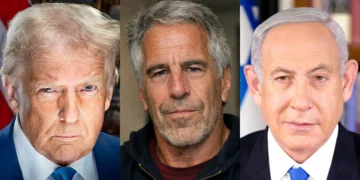
Nothing captures this cultivated muteness better than the bizarre episode involving Jeffrey Epstein — an alleged email suggesting that Imran Khan was neither to be courted nor co-opted but feared, and, by implication, eliminated. Authentic or not, the more telling question is why those who dissect every pixel of Epstein lore suddenly lose interest when the alleged target is not a Western elite figure but Khan — Pakistan’s outlier to global clientelism.
The coup that everyone saw — and nobody discussed
Let us speak plainly: the events of April 2022 were not a constitutional hiccup but a coordinated ouster, orchestrated by Pakistan’s military high command and endorsed by Washington. The House of Sharif and the House of Bhutto-Zardari, ever-faithful subcontractors of elite power, played their roles with enthusiasm.
For nearly three years, Pakistan has lived under an openly authoritarian order: elections rigged beyond parody, political parties crushed, and a former prime minister prosecuted with creativity befitting an autocrat’s handbook.
Yet the country’s intelligentsia responded with a timidity usually reserved for regimes they fear naming. Their caution was not irrational; it was selective. They felt bold critiquing Zionist apartheid, genocide, and Western imperial power — but mentioning Pakistan’s military establishment seemed to trigger an allergic reaction.
Why were these same voices fearless about the last taboo of Western political spaces — Israel — yet terrified to speak about Pakistan, their own homeland? Gaza, Sudan and Congo rightly received fervent attention. Pakistan’s escalating repression after Khan’s removal became the one topic tip-toed around like an uncomfortable family secret.
Intellectual evasions of a coup
The diaspora’s silence was even more instructive. Before April 2022, many confidently opined on Pakistan, posted selfies from Lahore cafés with activists, and hosted seminars on political reform. Then the coup arrived — and they vanished from the conversation.
For three years, those who built reputations on speaking truth to power treated Pakistan as a thesis they had accidentally deleted — and refused to rewrite.
Some who justified the regime change later, awkwardly, acknowledged the obvious: the Movement for Justice (PTI) dominated the 2024 elections, even after being denied its symbol, leadership and, in many cases, its candidates. They described this as a “surprise”, as if Pakistanis had suddenly discovered they preferred their own agency over military puppetry.
Their mistake was not misreading Khan’s appeal but misunderstanding the nature of repression. They assumed that because they abandoned Pakistan, Pakistanis had abandoned themselves. They had not.
Elite academia: radicalism without risk
Within Pakistan, elite universities perfected a more refined form of political containment. Their faculty did not parrot military propaganda; often, they critiqued the state. But this critique remained safely confined to English-language conferences and publications — the least risky arenas.
These institutions mastered a formula: cultivate radical aesthetics while ensuring political irrelevance. Students could perform dissent, but never organise it.
Those who crossed the line — turning critique into mobilisation — were swiftly neutralised. Not for their ideas, but for acting on them. Pakistan tolerates criticism; it does not tolerate organising.
Meanwhile, disappearances, abductions and torture became recurring features of political life, discussed by intellectuals with the casual tone used for load-shedding. Violence rarely reaches the privileged. Repression is normalised when narrated by those insulated from its consequences.
The global left’s blind spot
The global left — normally meticulous in tracking regime-change operations — largely ignored Pakistan’s. Khan did not need to be a revolutionary socialist to be targeted by multiple power centres.
A viewer of Democracy Now! might mistake its segments describing demonisation and destabilisation not for Venezuela but Pakistan. The similarity is striking; only the attention differs.
The irony is staggering: the only Muslim-majority nuclear state subjected to one of the most successful internal pacification campaigns in modern geopolitics barely registers in global progressive discourse. Pakistan is not absent because it lacks political tragedy but because acknowledging it exposes global moral cowardice.
The people who refuse to disappear
You may also want to read




Despite suffocating control by the security establishment, resistance persists. PTI supporters and activists have endured mass detentions, internet shutdowns, torture and systematic erasure from public life.
Imran Khan — now entering his third year of imprisonment — remains Pakistan’s most popular public figure and its most recognisable leader abroad. The more the establishment seeks to extinguish him, the larger he becomes. Pakistan’s military can manage misgovernance, paranoia and the militarisation of civic life — but it also excels at creating martyrs.
The most successful pacification in the Muslim world
Pakistan has undergone one of the most extensive internal pacification projects in the Muslim world. The state suppressed dissent not only through coercion but by outsourcing silence to sections of the intellectual class who internalised the boundaries of permissible speech.
The result is a political landscape where the ruling elite behave like monarchs, the opposition refuses to vanish, and the liberal intelligentsia mistake silence for sophistication.
The final reckoning
When history is written — whether in Islamabad or elsewhere — it will record the military’s ambitions, the political dynasties’ opportunism, Washington’s fingerprints and the people’s resilience. But it will also record something quieter: the moral retreat of those who should have known better.
One need only compare the words of Pakistan’s literati before April 2022 and after. The contrast is stark — and damning. Their silence did not protect them. It merely confirmed the state’s belief that conscience could be subdued into a whisper.
Yet the people of Pakistan have not forgotten. They continue mobilising, resisting and believing the state can be challenged. And they continue viewing Khan — flawed but defiant — as a symbol of political possibility the establishment cannot tolerate.
The tragedy is not that Pakistan was silenced.
It is that so many chose not to speak.
But silence is fragile. It cracks. It collapses. And, eventually — sometimes suddenly — the truth walks through.
Prof Junaid S Ahmad teaches Law, Religion and Global Politics and is the Director of the Centre for the Study of Islam and Decolonization (CSID), Islamabad, Pakistan. He is a member of the International Movement for a Just World (JUST), the Movement for Liberation from Nakba (MLN) and Saving Humanity and Planet Earth (SHAPE).