











































Following COP31, Ashraf Patel argues that South Africa and other Global South nations should consider strategic delinking from aspects of global climate, trade and technology systems to advance development, climate finance and sovereignty.
By ASHRAF PATEL
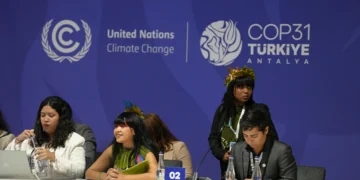
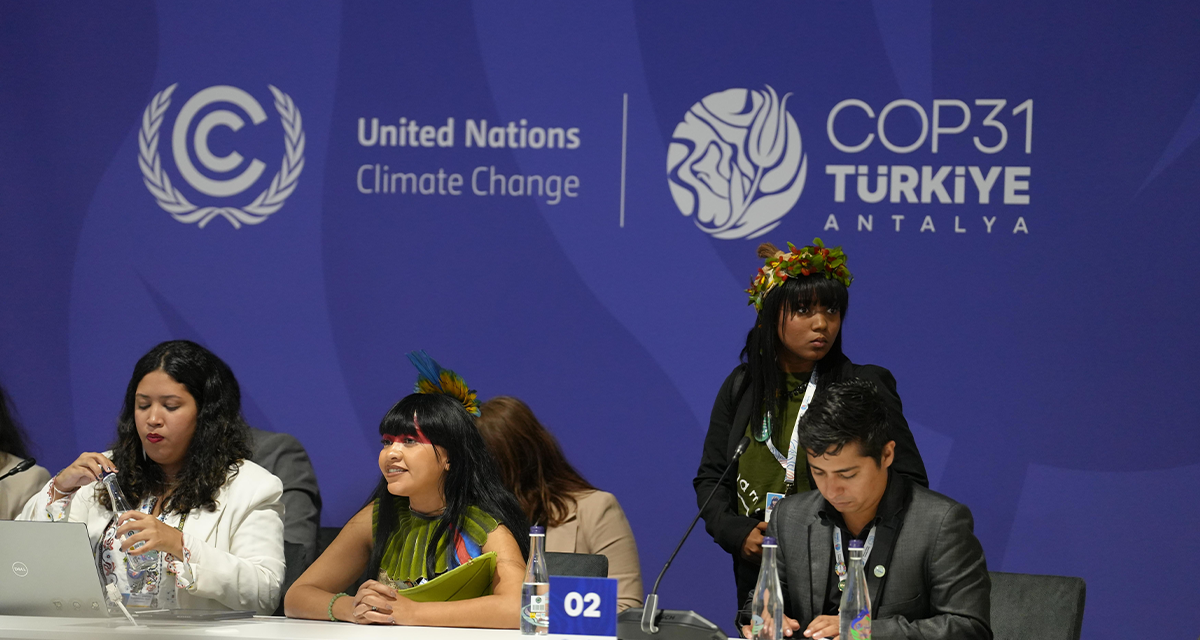
The UN COP 31 in Türkiye has failed – ostensibly due to disagreements between petro-fossil lobbies led by Saudi Arabia and the European Union.
At a time of ever-deepening crises from El Niño to critical minerals extractivism this is a great tragedy. Ironically, this year’s COP is the first since the UN’s environmental body in October confirmed the rise in global temperatures was set to overshoot 1.5°C, a level beyond which scientists say extreme weather impacts intensify.
Mohamed Adow, founder of Power Shift Africa captured the moment: “The COP Presidents want to tell us this has been a great COP. Well, I can tell you without any doubt that this has been the worst COP ever!”
Who is to blame? Both the petro and green lobbies actually.
To be sure the petro states lobby led by Saudi Arabia in a Trump fossil-fuelled ecosystem led to breakdown. But the European Union (EU) too should shoulder the blame. In the past years it has descaled on climate finance, and its oil giants are the most voracious investors in new oil fields across Africa. It’s Just Energy Transition (JET) decarbonisation model puts the industrialisation agenda of Africa on the back burner and hence cannot escape the poverty trap. Here the JET model promoted by EU and G7 on green loans is leading to more climate debts and promoting its renewable tech exports without adequate technology transfer. The mass of humanity residing in G77 nations are now rightly invoking the 1996 UN Right to Development Vienna convention.
Globalisation and its discontents deepen
The deep structural discontents had seen the rise of nationalism, Trumpism and Brexit in the last decade. But, despite the polycrises, it’s “business as usual” for both the fossil fuel and green lobbies.
So where to for Africa and the swathes of the Global South?
For decades the African Negotiations Group (AGN) and G77 have been negotiating in ‘good faith’ and with the hope that successive UN COP meetings will deliver the goods. Since the 2015 Paris Agreement there has been enormous hope – and expectation – that a new green just pathways is possible with the historical obligations of the North.
The late Professor Samir Amin, who was based at the Council for the Development of Social Science Research in Africa (CODESDRIA) in Dakar, has long advocated for ‘strategic delinking’– a strategy for developing nations to actively delink from the corrosive parts of globalisation such as finance, aspects of trade and donor aid, etc. That strategy is now feasible.
The visit of President Cyril Ramaphosa’s large delegation to Silicon Valley came amidst several cyberstorms in the United States (US). In that same week, the global Microsoft exchange breakdown and the federal aviation systems chaos exposed US digital supply chains.
In addition, unfettered AI and data centres are guzzling energy and water resources which are set to deepen the environmental and inequality crisis. Ironically, this is when South Africa’s own 2025 G20 communique on AI and sustainability and digital sovereignty were warning about these. Yet Ramaphosa’s Silicon visit ignored all the well-considered work by its own G20 presidency.
You may also want to read





The global Microsoft outage locked public sector workers in the United Kingdom out of email and Teams across hospitals, police services, courts and government departments, and exposed the UK’s control of critical digital infrastructure.
Here, delinking in some aspects of global tech would allow nations to build local capacity, data location and localised software for national public services.
There has been much debate among IR scholars on the role of middle powers in the current geopolitical superpower contest. For decades democratic South Africa has promoted itself as a gateway to investment and opening up of markets in Africa.
With the collapse of UN COP 31 and our G20 snub, South Africa now reaches a fork in the road.
Rejected by US nationalism and parts of empire, and fast losing its influence on the African continent, South Africa is in a unique position to act on behalf of the real Global South and the G77. It’s time for South Africa – and other middle powers such as Brazil and Mexico – to break from the chains of sub-imperial status and use their privileged position in globalisation to serve the masses of the Global South that reside in the G77 and Non-Aligned Movement (NAM).
A potential modest programme on strategic delinking can have the following features:
1. Delink from aspects of UN COP and form a Global South climate club with bottom lines on climate finance, climate debt and technology transfer obligations;
2. Delink from global data centres’ development and keep data local;
3. Draw up a new charter on critical minerals for green industrialisation;
4. Draw up a new charter on AI and Sustainability by and for the Global South;
5. Advocate for finance and debt and write off without conditions at the G20 and IMF;
6. Advocate for real World Trade Organisation (WTO) reform in all areas – trade, agriculture, fisheries and e-commerce; and
7. Promote balanced regional integration and sustainable value chains.
This alternative pathway can position South Africa at the forefront but it needs political will – and diplomatic and economic resources to flow southwards.
Is another world possible? If so, South Africa should then position itself on the right side of history and reject sub–imperialism.
Ashraf Patel is a senior research associate at the Institute for Global Dialogue (IGD) in South Africa, specialising in global governance, multilateralism, the political economy of the Global South, developmental justice and international relations.


